
Every year a company delays modernizing its legacy systems, the cost of staying still compounds. Maintenance costs climb, security vulnerabilities widen, and developer productivity erodes. The decision to migrate is rarely disputed; the challenge is executing it without disrupting the operations that depend on the systems being replaced. This is precisely why BPO is important during legacy software migration: a capable outsourcing partner keeps the business running while the migration takes place, and brings the specialized expertise to ensure the transition delivers the operational gains it was designed to create.
What Is Technical Debt and Why Does It Compound?
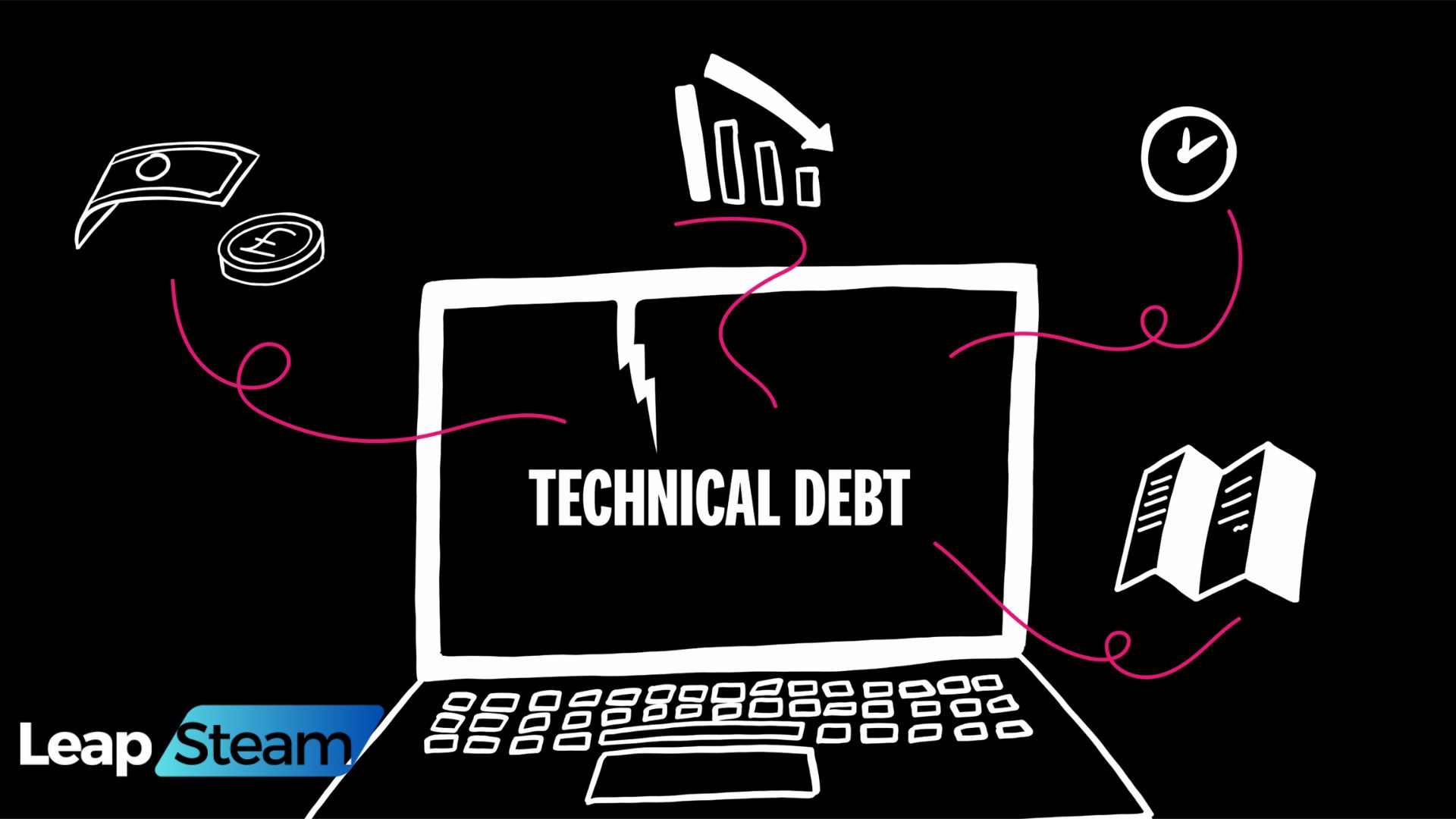
Technical debt is the accumulated cost of maintaining systems built on outdated architecture, undocumented code, and years of ad-hoc modifications that created long-term structural fragility. Like financial debt, it does not stay static; it accrues interest in the form of escalating maintenance costs, increasing defect rates, and shrinking developer capacity.
The scale of this burden is significant. According to McKinsey’s 2023 Technology Trends report, the average cost of maintaining legacy systems exceeds $30 million annually for mid-to-large enterprises, a figure that increases as the system ages and the pool of engineers familiar with legacy languages shrinks. Research from the Consortium for IT Software Quality found that up to 42% of developer time in organizations with significant legacy exposure is spent on rework and defect remediation, directly displacing product development capacity.
The security dimension compounds the urgency. Legacy systems were built before modern threat models existed. They lack native support for current encryption standards, zero-trust architecture, and API-based security controls, creating breach exposure that modern systems address by default, and that regulatory frameworks increasingly penalize.
What Operational Excellence Requires From a Modern System
Legacy migration is not valuable in itself, it is valuable because modern systems unlock capabilities that legacy architecture cannot support.
Cost efficiency. Cloud-native systems eliminate fixed infrastructure costs associated with on-premises legacy architecture. Gartner’s 2024 Cloud Strategy Report found that organizations completing legacy-to-cloud migrations report operational cost reductions of 30–65%, driven by pay-per-use infrastructure and elimination of end-of-life licensing costs.
Integration with current tooling. Modern systems support native integration with AI platforms, CRM systems, and third-party APIs through standardized protocols. Legacy systems require custom middleware for each connection adding cost and maintenance burden with every new integration.
Developer productivity and talent access. Engineers with expertise in legacy languages and proprietary frameworks are increasingly scarce and expensive. Modern stacks attract broader talent pools, support more productive development workflows, and eliminate the single-point-of-failure risk that comes with systems only a small number of engineers understand.
Compliance readiness. Modern systems are built with current frameworks in mind GDPR, SOC 2, HIPAA, PCI-DSS making ongoing compliance substantially less resource-intensive than retrofit compliance on legacy architecture.
Why BPO Is Important During Legacy Software Migration
The central operational challenge of legacy migration is that it requires two things simultaneously: maintaining the business processes that depend on the legacy system while building and transitioning to the replacement. Internal teams rarely have the capacity to do both without one suffering. This is the core reason why BPO is important in migration contexts as the operational continuity layer that makes the migration possible without service degradation.
Business continuity during transition. A BPO partner operates within the legacy system handling accounting workflows, customer support, HR processes, and data operations while the internal team focuses on migration design and execution. Without this separation, migration projects routinely stall because the engineers needed to build the new system are pulled back into supporting the old one.
Pre-migration process optimization. Legacy migrations that replicate broken processes into modern architecture deliver modern infrastructure with legacy-quality outcomes. A capable BPO partner maps existing workflows, identifies inefficiencies, and recommends optimizations before transfer so the new system is built on improved processes, not a digital reproduction of the old ones.
Specialized platform expertise. BPO partners bring direct experience with the platforms organizations are migrating to AWS, Azure, NetSuite, Salesforce without the learning curve an internal team would need to develop from scratch. This reduces implementation risk and lowers the probability of costly architectural decisions made by teams encountering a platform for the first time.
Scalable capacity for peak migration phases. Migrations have high-intensity phases, data migration, parallel running, cutover that require surge capacity. BPO partners provide flexible staffing for these phases without the commitment of permanent hires, absorbing peak load and returning to baseline once the transition stabilizes.
How Customer Service Outsourcing Fits Into a Migration Strategy
Customer service outsourcing is one of the most strategically important and most commonly underestimated components of a migration-phase BPO arrangement.
When customer-facing systems are being migrated, support ticket volume predictably spikes. CRM transitions, e-commerce platform upgrades, and billing system migrations all create temporary friction: slower response times, incomplete order histories, and edge cases that surface only in production. If the internal team is absorbed in the migration, that spike goes unanswered compounding user frustration at the moment the brand is most exposed.
Outsourcing customer support during migration provides a dedicated team to absorb this volume, communicate proactively with affected users, and document technical issues for the migration team with the detail needed to act on them. This is customer service outsourcing functioning as operational risk management not just a support function.
Beyond the migration window, customer service outsourcing partners briefed on both the legacy workflows and the modernized architecture can continue providing support post-migration reducing the handoff friction that typically degrades support quality in the months following a major system change.
Conclusion
Technical debt constrains every organization that has deferred modernization. Legacy migration resolves it but only if the transition can be executed without collapsing the operations it is meant to improve. BPO is important in this context because it provides the operational continuity, specialized expertise, and flexible capacity that internal teams cannot sustain while managing a complex migration simultaneously.
The organizations that execute legacy migrations most successfully treat their BPO partner as a co-owner of the transition, not a temporary vendor managing overflow. That distinction determines whether the migration delivers the operational excellence it was designed to create.
Frequently Asked Questions
Why is BPO important specifically during migration rather than just before or after?
The migration phase is when internal teams are most constrained and operations most exposed. BPO partners provide the continuity layer that allows the migration to proceed at full speed without degrading the services that depend on the systems being replaced.
How does customer service outsourcing reduce migration risk?
When customer-facing systems are in transition, support volume spikes predictably. Customer service outsourcing absorbs that volume, communicates proactively with affected users, and documents technical issues for the migration team preventing user frustration from compounding while the internal team is focused on the cutover.
How do we prevent the BPO partner from replicating broken legacy processes into the new system?
Through a structured pre-migration process audit a formal phase where the BPO partner maps existing workflows, identifies inefficiencies, and recommends optimizations before transfer. Ask prospective partners specifically how they conduct this phase and request examples from previous migration engagements.
What is the typical duration of a BPO engagement for migration support?
Migration-phase engagements typically run three to twelve months depending on system complexity. Most begin two to four weeks before cutover to allow knowledge transfer and process documentation, and extend four to eight weeks post-migration to stabilize support volume and address production edge cases.
Leap Steam provides BPO and customer service outsourcing for US tech companies managing legacy migration and operational scaling across fintech, e-commerce, SaaS, gaming, and automotive technology.