
There’s a moment every SaaS founder recognizes: your product is gaining traction, your user base is crossing time zones, and your inbox is becoming a liability. Email support – once manageable – is now a strategic bottleneck. The companies that scale past this moment aren’t necessarily the ones that hire faster. They’re the ones who think differently about how support gets delivered.
Why Email Is Still the Backbone of SaaS Customer Communication
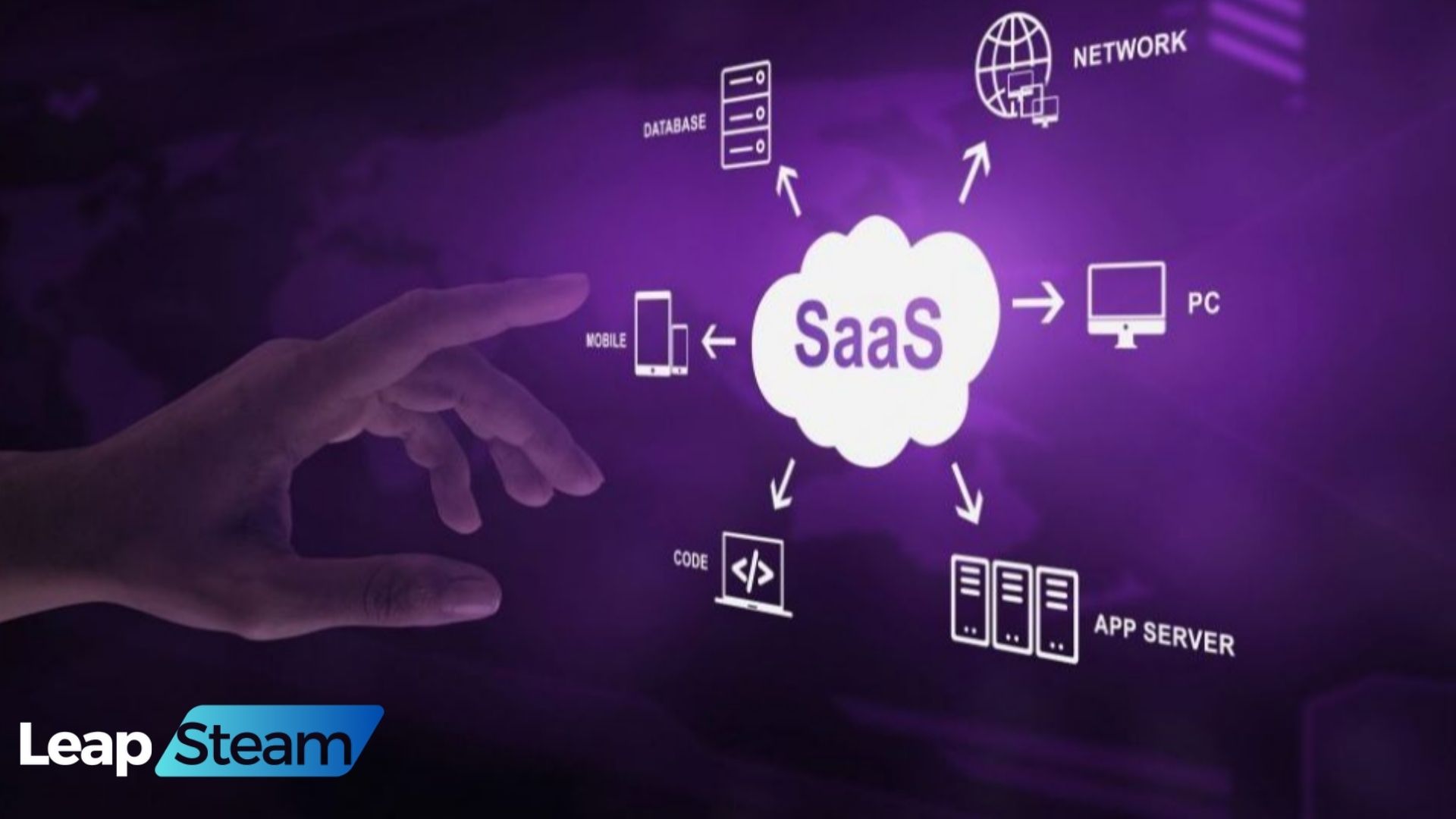
Despite the rise of live chat and AI bots, email remains the dominant support channel for B2B SaaS. Research from Statista shows that over 361 billion emails are sent daily – and enterprise clients, in particular, default to email for anything that requires a paper trail, escalations, or nuanced technical queries.
What makes email uniquely powerful for SaaS is its asynchronous nature. Unlike live chat, email doesn’t demand simultaneous availability on both ends. A customer in Berlin can send a detailed bug report at 11 PM, and a support agent in a different time zone can deliver a thorough, well-researched response by morning. This time shift isn’t a limitation – it’s leverage.
Most SaaS teams treat email support as a real-time operation, staffing for speed rather than quality. This leads to burnout, high turnover, and responses that prioritize closure over resolution.
The Hidden Cost of Keeping Email Support In-House
Founders often resist outsourcing email support because it feels like a loss of control. But the math rarely supports that instinct.
Consider what in-house email support actually costs: a mid-level support specialist in North America runs $55,000–$75,000 annually in salary alone, before benefits, equipment, and management overhead. To cover business hours across U.S. time zones – never mind global coverage – you need multiple headcounts. And every hiring cycle pulls your team leads away from product and growth work.
There’s also a quality problem. According to HubSpot’s Customer Service Report, 93% of customers are likely to make repeat purchases with companies that offer excellent customer service – yet most SaaS teams operate email queues reactively, without playbooks, tone guides, or knowledge bases robust enough to maintain consistency at scale.
When email support is under-resourced, the symptoms show up in churn, not in a support dashboard. That’s what makes it so dangerous.
What Professional Outsource Email Support Actually Looks Like
The market for outsource email support has matured significantly. What you’re buying today isn’t a call center with a different job title – it’s a specialized operation with SaaS-specific experience, tooling fluency (Intercom, Zendesk, Front, Help Scout), and the ability to work within your brand voice.
The best providers segment agents by product vertical. A SaaS company handling developer tools has wildly different support needs than a fintech platform – and modern customer support outsourcing providers build dedicated pods accordingly. These pods operate with shared context: they use your knowledge base, follow your escalation protocols, and in many cases, contribute to improving your documentation over time.
Critically, professional email support teams are trained in tone calibration – one of the most undervalued skills in B2B support. A frustrated enterprise customer escalating a broken integration needs a different register than a first-time user confused about onboarding. Getting this wrong at scale damages trust fast.
The Asynchronous Playbook: Making Email Work Harder
The SaaS companies that get the most from outsourced email support aren’t just handing off a queue. They’re redesigning how email fits into their support architecture.
Tiered response frameworks are the starting point. Tier 1 handles routine queries – billing, password resets, feature questions. Tier 2 takes on integration issues or multi-step troubleshooting. Tier 3 escalates to internal engineers. A well-run outsource team handles Tiers 1 and 2 entirely, and drafts Tier 3 escalations with full context so your engineers spend minutes – not hours – resolving complex issues.
Template libraries with dynamic personalization are another lever. The mistake most teams make is either fully templated (robotic) or fully freeform (inconsistent). The sweet spot is modular: standard openers and closers, with flexible middle blocks that agents can adapt per case. Intercom research has shown that personalized responses increase customer satisfaction scores by up to 15% over generic templates, even when response time is identical.
SLA-driven workflows close the loop. Email may be asynchronous, but expectations aren’t. Best-in-class outsourced teams operate on defined SLAs – typically first response within 4–8 hours for B2B SaaS – with internal escalation triggers if tickets age past thresholds. This makes email feel responsive without requiring round-the-clock internal staffing.
Building Trust Without Losing Brand Voice
The anxiety most founders carry into customer support outsourcing is voice consistency. Will agents sound like your company? Will they understand your product well enough to not embarrass you?
These are legitimate concerns – and the answer lies in onboarding architecture, not agent quality alone. Companies that successfully outsource email support invest upfront in building:
- A living knowledge base with product updates pushed to the outsourced team on a defined cadence
- A tone and vocabulary guide that captures not just what to say, but what to avoid (jargon, over-apologizing, hedging language)
- A weekly QA loop where internal team leads review a sample of responses and provide structured feedback
With this infrastructure in place, outsourced email agents often outperform in-house generalists – because they’re only doing email support, with no context-switching into product meetings, internal Slack fires, or other operational distractions.
The Strategic Case for Outsourcing Now, Not Later
The conventional wisdom is to outsource support after you’ve figured it out internally. This gets the sequence backwards.
Early-stage SaaS companies that outsource email support from Series A onward gain something more valuable than cost savings: they gain organizational clarity. When email support is handled by specialists, founders and product teams stop firefighting and start building. Customer feedback flows in through a structured channel rather than scattered inboxes. Patterns surface faster. And when it’s time to scale – whether through a funding round or a product launch – the support infrastructure scales with you, not behind you.
Gartner projects that by 2025, 80% of customer service organizations will have abandoned native mobile apps in favor of messaging – but email isn’t going anywhere in B2B. The companies winning on retention are those treating email support not as overhead, but as a precision instrument for customer relationships.
The asynchronous advantage is real. The question is whether you’re the one capturing it.
Frequently Asked Questions (FAQ)
1. How do I know if my SaaS company is ready to outsource email support?
A good signal is when your team is consistently spending more than 20–30% of their week on support tickets rather than product or growth work – or when first-response times are slipping past 8 hours. If you have a knowledge base (even a basic one) and defined escalation paths, you’re ready. You don’t need a perfect support system to outsource; you need enough structure for an external team to work from.
2. Will outsourced agents truly understand our product well enough to support customers?
This depends almost entirely on your onboarding process, not the agent’s baseline ability. The most successful outsourced email support setups treat the first 4–6 weeks as a joint investment: product walkthroughs, access to your internal docs, shadow sessions on real tickets, and a feedback loop with your internal lead. Agents who focus exclusively on email support often develop deeper product familiarity than in-house generalists who split their time across multiple roles.
3. What’s a realistic SLA to expect from an outsourced email support team?
For B2B SaaS, a first response within 4–8 business hours is the industry standard for Tier 1 and Tier 2 tickets. Some providers offer sub-4-hour SLAs with premium pricing or dedicated headcount. Full resolution times vary by complexity – routine tickets should close within 24 hours, while multi-step technical issues may run 48–72 hours. Make sure your contract defines both first response and resolution SLAs, as providers often only guarantee the former.
4. How do we maintain brand voice consistency with an external team?
The short answer: documentation and feedback cadence, not micromanagement. Build a tone guide that goes beyond “be friendly” – include real examples of on-brand vs. off-brand responses, words to avoid, and how to handle emotionally charged tickets. Pair that with a weekly QA review where you sample 10–15% of outgoing responses and share structured notes. Most outsourced teams will adapt quickly; the ones that don’t flag it early are the ones worth keeping long-term.