App founders building their first support team consistently underestimate what in-house operations actually cost and overestimate the risk of outsourcing. The comparison rarely goes deeper than base salary versus vendor hourly rate, which produces a financial model that is structurally wrong before the first hire is made. This guide debunks the five most common cost myths in the in-house versus outsourced support debate, provides verified pricing benchmarks for customer service outsourcing, and shows how to calculate the number that actually matters: your true cost per resolved ticket.
Myth 1: The Agent’s Hourly Wage Is the Total Cost

The most common financial mistake app founders make is comparing the hourly rate of a BPO provider directly to the base hourly wage of an internal hire. This comparison ignores the majority of what an internal employee actually costs.
The fully loaded cost of an internal employee including payroll taxes, health insurance, paid time off, equipment provisioning, and facility overhead runs 25 – 40% above base salary, according to the Society for Human Resource Management’s (SHRM) 2024 Employee Benefits Survey. For a customer support agent earning $45,000 per year in base salary, the true annual cost to the company ranges from $56,000 to $63,000 before management overhead is added.
When you outsource customer service, the vendor’s hourly rate or monthly retainer is typically all-inclusive. The BPO absorbs benefits, workstation hardware, facility costs, and HR administration. The financial outlay becomes predictable as a fixed line item rather than a variable cost that shifts with headcount, benefits utilization, and attrition cycles.
Myth 2: Internal Training Is Cheaper Because It’s Handled In-House
Customer support roles carry some of the highest attrition rates of any professional function. According to the 2024 Contact Center Industry Report by ICMI, average annual attrition in US customer support operations runs between 30% and 45% meaning a team of ten agents loses three to five people every year under normal conditions.
Each departure triggers a full replacement cycle: job posting, interviews, offer negotiation, onboarding, and the productivity ramp before the new agent reaches full capability. SHRM’s research estimates the average cost of replacing a customer service representative at 50 – 60% of their annual salary approximately $22,000 – $27,000 per departure for a mid-level support agent.
In customer service outsourcing, attrition risk transfers to the vendor. When an outsourced agent leaves the engagement, the BPO is contractually obligated to recruit, hire, and train a replacement at their own cost to maintain the required headcount and SLA performance. Your internal team does not lose bandwidth managing the replacement cycle, they continue operating against the service targets already in place.
Myth 3: Software and Tooling Costs Are Negligible
Running a modern app support operation requires an enterprise software stack that compounds quickly with headcount. Zendesk’s professional tier runs $49 – $99 per agent per seat per month. Salesforce Service Cloud starts at $75 per seat. Quality assurance platforms, workforce management tools, and internal communication infrastructure add further per-seat costs on top.
For a ten-agent internal team using mid-tier Zendesk, software licensing alone runs $6,000–$12,000 per year before any other tooling is added. These costs scale linearly with every agent added and are non-negotiable operational expenses.
Many BPO providers operate on enterprise-grade infrastructure with volume discounts unavailable to individual companies at typical support team sizes. They either integrate directly into your existing systems or operate on their own licensed platforms in both cases, software costs are included in the engagement rate rather than itemized separately. When you outsource customer service, you access enterprise tooling at a cost structure that individual companies cannot replicate at equivalent scale.
Myth 4: Scaling Up Is Just a Matter of Adding More Agents

App growth is rarely linear. A successful product launch or marketing campaign can double active users overnight and support ticket volume follows within hours. The instinctive response is to hire more agents, but the management structure that makes those agents effective does not scale as simply.
Adding ten agents without adding supervisory infrastructure produces a team with no quality oversight, inconsistent escalation behavior, and declining CSAT as the span of control exceeds what existing team leads can manage. A functional support operation at that scale requires a QA specialist, an additional team lead, and updated reporting infrastructure costs that compound the per-agent investment significantly.
When you outsource customer service, BPO partners scale through existing management structures. Because they operate large resource pools across multiple client accounts, they can assign fractional QA and supervisory resources to your account as volume increases spreading management overhead across the pool rather than requiring you to hire dedicated management for your headcount alone. You pay for output and SLA adherence; the BPO handles the operational complexity of scaling the management layer.
Myth 5: You Must Sacrifice Quality for Cost Savings
The assumption that in-house support is inherently higher quality than outsourced support reflects how internal teams are imagined, not how they typically operate in practice. Internal teams without dedicated QA infrastructure develop inconsistent habits, knowledge base gaps, and escalation patterns that are never systematically identified or corrected.
Professional BPO partners operate under contractual Service Level Agreements that mandate specific CSAT, FCR, and ticket reopen rate targets with financial penalties for non-compliance. According to Gartner’s 2024 Customer Service and Support Leadership Survey, organizations with contractual SLA frameworks in their outsourced support operations report 31% higher CSAT scores on average than those relying on informal performance management with internal teams.
The quality advantage of in-house support is real only when the internal team has dedicated QA management, structured training programs, and performance accountability frameworks infrastructure that most app companies below Series B have not built. Without it, the quality comparison favors a well-structured outsource customer service engagement over an informal internal team consistently.
How Much Does It Cost to Outsource Customer Service?
Pricing for customer service outsourcing varies by support tier, language coverage, and geographic location of the delivery team. The following benchmarks reflect 2026 market rates for dedicated app support, compiled from Clutch’s 2025 B2B Service Providers Report and HDI’s 2024 Support Center Practices data:
Hourly Dedicated Model
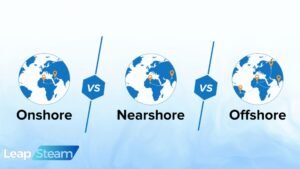
| Location | Tier 1 App Support | Tier 2 Technical |
| Offshore (Vietnam, Philippines) | $8–$15/hour | $15–$25/hour |
| Nearshore (Latin America) | $12–$20/hour | $20–$32/hour |
| Onshore (US-based) | $25–$40+/hour | $35–$55+/hour |
Per-Ticket Model Appropriate for apps with low or unpredictable volume. Billing occurs only when a ticket is resolved. Rates range from $1.50–$4.00 per resolved ticket depending on complexity and language requirements. This model works well below 500 tickets per month above that threshold, a dedicated hourly or retainer model typically produces better per-ticket economics.
Monthly Retainer A fixed monthly cost covering a dedicated agent pod, QA lead, and account manager. Provides absolute budget predictability and is the most common pricing model for engagements above 1,000 tickets per month. Most BPO providers require a minimum of 2–3 full-time equivalents (FTEs) for dedicated retainer engagements.
Calculating Your True Cost Per Resolution
The financially accurate comparison between in-house and outsourced support is not hourly rate versus hourly rate, it is Cost Per Resolution (CPR) versus CPR.
To calculate your internal CPR: take your entire monthly support department budget, salaries, benefits, software licenses, management time, HR recruitment costs, and facility overhead and divide by the number of tickets successfully resolved that month. For most app companies running informal internal support operations, this figure runs $25 – $45 per resolved ticket when all costs are included.
For a well-managed outsource customer service engagement with a Vietnam-based dedicated team, CPR typically runs $8 – $15 per resolved ticket at steady state representing a 50 – 65% cost reduction per resolution while providing 24/7 coverage that an internal team cannot sustain at the same cost.
The comparison becomes more favorable for outsourcing as ticket volume increases, because BPO management overhead spreads across higher volume while internal management costs scale with headcount regardless of ticket throughput.
Conclusion
The financial case for customer service outsourcing is not primarily about hourly rate, it is about total operational cost when all inputs are included. Attrition replacement costs, software licensing, management overhead, and the inability to scale without proportional management investment all compound the true cost of in-house support beyond what base salary comparisons reveal.
When you outsource customer service to a specialist partner, you convert those variables, compounding costs into a predictable operational model one that scales with ticket volume rather than headcount, and transfers attrition and management complexity to a vendor whose core competency is absorbing both.
Frequently Asked Questions
Is there a minimum ticket volume required to outsource customer service?
Most dedicated-agent BPO models require a minimum of 2 – 3 full-time equivalents. If your app generates fewer than 500 tickets per month, a shared-agent or per-ticket pricing model is the most financially viable entry point. Below 200 tickets per month, the economics of any outsourced model are difficult to justify against informal internal handling; the setup and management investment exceeds the operational savings at that volume.
Does outsourcing support mean eliminating the internal team entirely?
Rarely. The most cost-effective structure is a hybrid model: the BPO handles high-volume Tier 1 inquiries (password resets, billing questions, order status, basic bug reports), while a small internal team manages Tier 2 technical escalations and VIP account relationships. This division preserves the institutional knowledge and relationship depth that outsourced agents cannot replicate for high-value accounts, while eliminating the overhead of staffing routine volume internally.
What hidden costs should we watch for in a customer service outsourcing contract?
The three most common sources of unexpected cost: setup and onboarding fees (covering the initial training period – typically $2,000–$8,000 depending on product complexity), software licensing charges (confirm whether helpdesk seat costs are included in the rate or billed separately), and volume overage rates (the per-ticket or per-hour rate that applies when monthly volume exceeds the contracted baseline). A transparent BPO partner itemizes each of these clearly in the Master Services Agreement before signing.
How do we verify that the BPO is actually saving us money?
Calculate CPR monthly using your own data total engagement cost divided by tickets resolved. Track how this figure changes from month one to month six as agents build product knowledge and FCR improves. Secondary indicator: monitor escalation rate to your internal engineering team. A BPO that resolves 70%+ of tickets at Tier 1 is generating real cost savings. One escalating 30%+ of tickets to your internal team is transferring cost rather than eliminating it. The engineering time consumed by those escalations offsets the support savings.
Leap Steam provides outsource customer service for US app companies across fintech, e-commerce, SaaS, gaming, and automotive technology. Our dedicated support pods are priced on transparent monthly retainer structures with onboarding costs, software integration, and QA infrastructure included.