
You spend thousands of dollars on paid ads and SEO to drive targeted traffic to your landing pages. A prospect clicks your ad at 11 PM, lands on your page, has a question about pricing or implementation, and finds no one to answer it. They leave. Your ad spend generated a click that converted into nothing not because your offer was wrong, but because the support infrastructure was not there when the prospect was ready. According to Intercom’s 2024 Conversational Support Benchmark, businesses with 24/7 human live chat coverage convert website visitors at 2.4 times the rate of those relying on chatbots or offline support during evening and weekend hours. Outsourcing livechat 24/7 is not a support cost. It is a conversion investment that directly protects the ROI of every dollar spent on traffic acquisition.
You Lose High-Intent Traffic After Hours
Paid traffic does not follow business hours. Google and Meta campaigns run continuously, and the visitors arriving at your landing pages at 9 PM or 2 AM are not lower-intent than those arriving at noon, they are often higher-intent, because they are actively researching outside working hours rather than passively browsing during the workday.
According to Shopify’s 2024 Commerce Report, 43% of online purchases and 38% of B2B inquiry submissions occur between 8 PM and midnight local time. For SaaS companies running Google Ads targeting bottom-of-funnel keywords, Drift’s 2024 Conversational Marketing Benchmark found that 47% of qualified leads engage with landing pages outside standard US business hours.
When your live chat goes offline at 5 PM, you are not just missing support conversations, you are abandoning nearly half your paid traffic at the exact moment it arrives. The economics are direct: if your Cost Per Click is $15 and your landing page conversion rate is 3% with 24/7 live chat coverage, dropping to chatbot-only after hours reduces that conversion rate to under 1.3% during off-hours traffic effectively tripling your effective CPA for half your daily volume.
Every prospect who arrives with a specific question about pricing tiers, implementation requirements, integration compatibility, or contract terms and finds no human available to answer it makes a decision in seconds: wait, search for the answer independently, or go to a competitor who answers immediately. In competitive markets, the third option is the most common outcome.
Every Unanswered Question Is Friction That Kills Conversions

Conversion rate optimization practitioners use a simple model: every unresolved question in a prospect’s mind is a friction point that reduces the probability of conversion. The more friction between a prospect’s current state and the conversion action, the lower the conversion rate regardless of how good the offer is.
Live chat resolves friction in real time. A prospect hesitating over a pricing question does not need a FAQ page, they need a 30-second answer from a person who can confirm the relevant details and move the conversation forward. According to HubSpot’s 2024 State of Marketing Report, landing pages with active live chat support see average conversion rate lifts of 20 – 40% compared to equivalent pages without live chat, attributed directly to real-time objection resolution.
The friction accumulates in specific, predictable patterns that vary by business type:
SaaS landing pages: Integration compatibility questions, implementation timeline concerns, contract flexibility, and feature comparison with competitors. These are questions that a well-trained live chat agent can answer in under two minutes and that, left unanswered, send the prospect to a competitor’s comparison page.
E-commerce landing pages: Shipping cost confirmation, return policy specifics, product specification details, and availability for specific variants. Intercom’s research found that proactive live chat triggered when a visitor spends more than 90 seconds on a product page reduces bounce rate by 31% on average.
B2B services landing pages: Pricing structure, case study relevance, onboarding process, and contract terms. These are high-consideration purchases where a single unanswered question can delay a decision by days or weeks and where a live human who can schedule a follow-up call converts the session into a qualified pipeline entry.
When you outsource livechat 24/7, you eliminate the after-hours friction gap entirely, every visitor at every hour has access to the same real-time objection resolution capability.
In-House Support Creates Bottlenecks That Scale Against You
The alternative to outsourcing livechat 24/7 assigning chat coverage to internal sales or support staff introduces a structural bottleneck that worsens as traffic scales.
Internal team members assigned to chat coverage face a divided attention problem. A sales rep handling inbound chat during their primary selling hours is simultaneously less effective at selling and less responsive on chat. According to the University of California, Irvine’s interruption research, recovering full cognitive focus after a chat notification takes an average of 23 minutes meaning each chat interruption costs the internal team member nearly half an hour of productive primary-role capacity.
As traffic volume increases, this bottleneck compounds. During a campaign launch or a viral content moment, chat volume can spike 3 – 5x normal levels overnight. An internal team sized for average load cannot absorb this surge without response time degradation that directly reduces conversion rates during the highest-value traffic periods.
The cost of this degradation is calculable: if a campaign drives 1,000 landing page visits at $12 CPC, and response time degradation during peak hours reduces conversion rate from 3% to 1.5%, the campaign generates 15 fewer conversions at an acquisition cost of $12,000 in forfeited traffic value that the ad budget already paid for.
Customer support outsourcing eliminates this bottleneck by placing chat coverage in the hands of a dedicated team whose only function is live engagement, not a secondary task assigned to staff with primary responsibilities elsewhere.
How Outsourcing Livechat 24/7 Saves Your Landing Page ROI
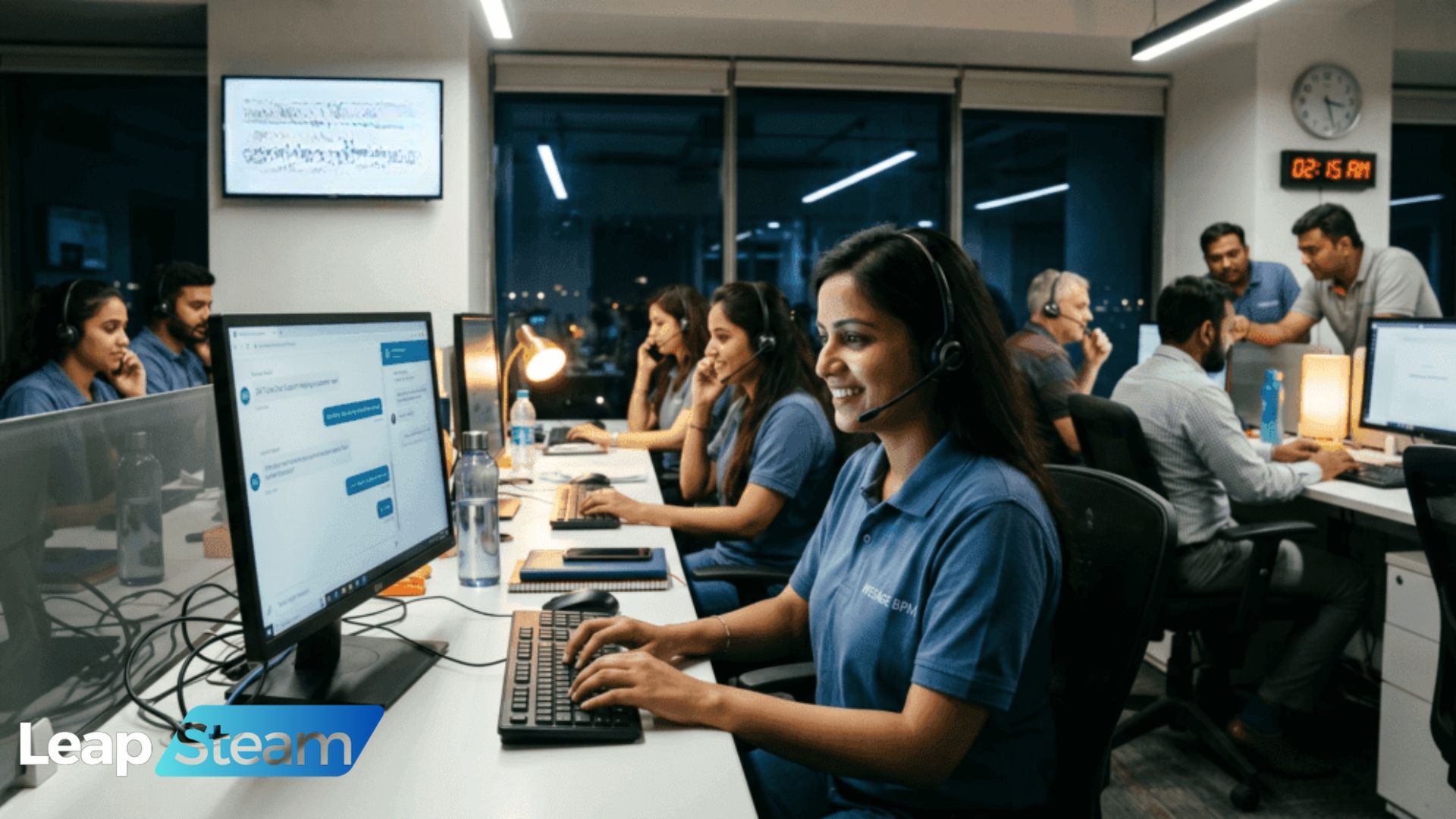
An outsourced 24/7 live chat operation contributes to landing page ROI through four specific mechanisms:
Immediate engagement for off-hours traffic. Every visitor at every hour is greeted by a trained human agent within seconds of initiating a chat. Off-hours traffic which represents 38 – 47% of total landing page visits for most B2B and e-commerce businesses converts at rates comparable to business-hours traffic rather than degrading to near-zero without coverage.
Real-time lead qualification and capture. Outsourced live chat agents qualify inbound leads according to your criteria, capture contact information, ask discovery questions, and log the interaction in your CRM so your internal sales team wakes up to a pipeline of qualified leads rather than a list of anonymous visitors who bounced overnight.
Objection resolution before bounce. Trained agents can answer the specific questions your offer generates: pricing, integration, timeline, contract terms in the moment of peak prospect interest, rather than routing visitors to a FAQ page or scheduling a follow-up for the next business day. Resolving a single objection in real-time converts at substantially higher rates than any asynchronous follow-up mechanism.
Appointment and demo booking. For B2B and high-consideration products, outsourced chat agents can book discovery calls, product demos, and consultations directly into your calendar during the chat session converting high-intent traffic into pipeline without requiring the prospect to navigate a booking flow independently.
According to Salesforce’s 2025 State of the Connected Customer report, leads engaged via live chat within the first five minutes of a landing page visit are 21 times more likely to convert to a qualified opportunity than those who were not engaged during that session.
How to Measure Live Chat ROI on Your Landing Pages
Digital marketers and sales directors evaluating whether to outsource livechat 24/7 need a measurement framework that connects live chat activity to campaign economics. The following metrics provide that connection:
Chat-to-Conversion Rate. Most enterprise chat platforms (Intercom, Drift, Zendesk, Gorgias) support session-level attribution tracking whether a visitor who engaged in live chat completed the conversion action (form submission, purchase, demo booking) within a defined window (typically 24 hours). Compare this rate against non-chat visitors on the same landing page to quantify the conversion lift.
Off-Hours Conversion Rate vs Business Hours. Segment your landing page conversion data by time of day and compare off-hours performance (typically 6 PM – 8 AM and weekends) before and after implementing 24/7 chat coverage. This comparison isolates the ROI contribution of after-hours coverage specifically.
Chat-Assisted CPA. Calculate the effective Cost Per Acquisition for conversions that included a chat interaction versus those that did not. If chat-assisted CPA is lower than unassisted CPA, the chat engagement is improving campaign economics justifying the outsourcing cost directly against the ad budget it is protecting.
Lead Quality Score by Source. If your outsourced chat agents are qualifying leads before logging them in your CRM, track the downstream conversion rate (chat-qualified leads to closed deals) against leads sourced through other channels. This connects the top-of-funnel chat engagement to bottom-of-funnel revenue outcomes.
Response Time Impact on Conversion. Test the correlation between chat response time and conversion rate on your landing pages. Intercom’s benchmark data shows a sharp conversion rate decline when first response time exceeds 60 seconds data that quantifies the value of dedicated 24/7 coverage versus internal staff who respond when available.
Conclusion
Every dollar spent on paid traffic to a landing page is a bet that the landing page will convert the visitor. When live chat is offline during the hours that 38 – 47% of your traffic arrives, you are leaving a significant portion of that bet on the table not because the prospect was not qualified, but because no one was there to answer their question when they were ready to act.
Outsourcing livechat 24/7 closes that gap. It converts off-hours traffic at rates comparable to business-hours traffic, eliminates the internal bottleneck of assigning chat to staff with primary responsibilities, and generates a measurable, attributable lift in landing page conversion rates that directly protects the ROI of your traffic acquisition spend.
Frequently Asked Questions
How quickly do outsourced live chat agents need to respond to protect conversion rates?
According to Intercom’s 2024 benchmark data, conversion rates on landing pages drop sharply when first response time exceeds 60 seconds. The target for a 24/7 outsourced live chat operation should be a first human response within 30 seconds during staffed hours. Anything beyond 90 seconds produces conversion rates comparable to no chat coverage effectively eliminating the ROI benefit of the engagement.
Can outsourced live chat agents qualify leads and book demos directly?
Yes and this is one of the highest-ROI applications of outsourcing livechat 24/7 for B2B businesses. Agents are trained on your qualification criteria, discovery questions, and booking process during onboarding. They capture the relevant information, log it in your CRM (Salesforce, HubSpot, or equivalent), and book discovery calls or demo appointments directly into your calendar so your sales team starts each day with a qualified pipeline rather than anonymous bounce data.
How do we integrate outsourced live chat agents with our landing page technology stack?
Most enterprise chat platforms support agent seat provisioning for external teams; outsourced agents log into your Intercom, Drift, Zendesk, or Gorgias workspace and operate within your existing routing and CRM integration infrastructure. Your internal team retains administrative control over routing rules, canned responses, and CRM field mapping. The outsourced team operates as users within the system you already own, not in a separate platform that requires data migration.
What is the minimum traffic volume that justifies outsourcing livechat 24/7?
The break-even calculation depends on your CPC and conversion rate differential. As a general benchmark: if your landing pages generate more than 500 monthly visitors during off-hours windows and your current off-hours conversion rate is below 1%, a 24/7 outsourced live chat engagement at $6,000 – $10,000 per month will typically produce a positive ROI within 60 – 90 days through conversion rate lift alone before any lead qualification or sales pipeline value is counted.
Leap Steam provides outsourced livechat 24/7 services for digital marketers, founders, and sales teams across e-commerce, SaaS, fintech, and B2B services. Our agents are trained on your offer, qualification criteria, and booking process delivering 24/7 landing page coverage that converts off-hours traffic into qualified pipeline.








Pingback: Why Ultra-Low Latency Outsource Livechat 24/7 Wins Gen Alpha - Leap Steam