
The consumer Internet of Things (IoT) market is booming, surpassing trillion-dollar valuations. Connected devices are now essential, yet their complexity is staggering. Smart homes aren’t just isolated gadgets; they are deeply intertwined digital networks. For manufacturers, this connectivity creates a massive operational burden. As user bases scale, providing seamless, end-to-end assistance internally becomes impossible. To thrive in 2026, tech brands must strategically outsource customer support. Partnering with specialized BPO providers equips IoT companies with the elite talent needed to flawlessly manage the entire customer journey. Here are the five critical support services every consumer IoT company must delegate.
The Complexity of the 2026 IoT Customer Journey
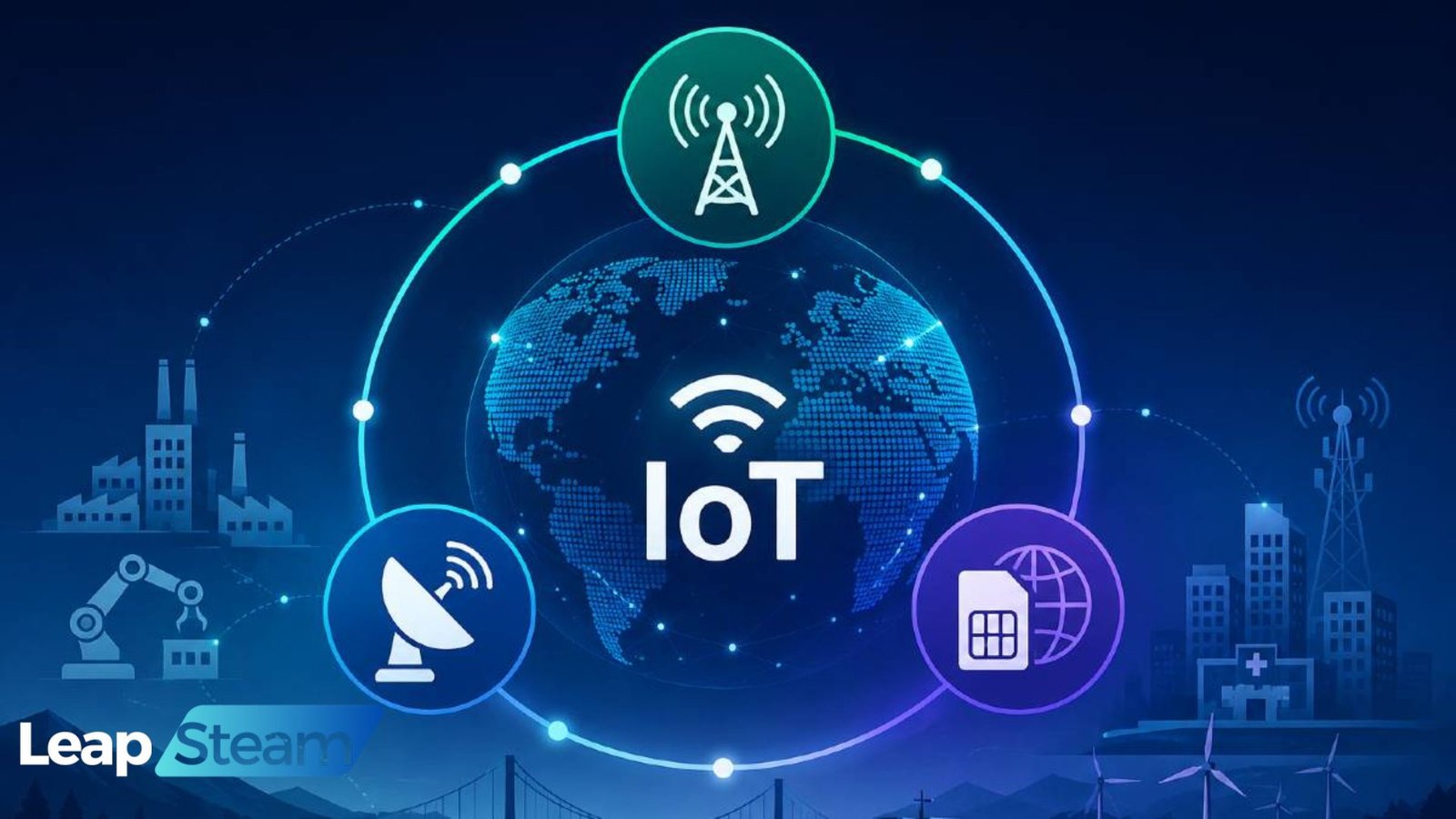
Before diving into the specific services, it is crucial to understand why the IoT customer journey has become so demanding. New IoT devices ranging from smart thermostats and security cameras to connected fitness equipment are heavily marketed as “Do-It-Yourself” (DIY). However, the reality of DIY installation is often fraught with technical friction.
A single consumer device must seamlessly connect to a local 2.4GHz or 5GHz Wi-Fi network, pair via Bluetooth Low Energy (BLE), and integrate flawlessly with massive, third-party platforms like Amazon Alexa, Google Home, Apple HomeKit, or Samsung SmartThings. Furthermore, these devices must cohabitate with legacy hardware utilizing modern interoperability protocols like Matter.
When a device goes offline, the consumer does not care if the fault lies with their router, the third-party voice assistant, or your hardware, they expect you to fix it. This immense pressure is driving top-tier hardware vendors to heavily invest in customer service outsourcing. By leveraging a comprehensive Customer Journey Support model, you ensure that every touchpoint from the initial online purchase to the final device upgrade is handled by professionals.
Here are the five essential services you need to outsource to guarantee a flawless IoT customer experience.
1. Managing Order Support and Fulfillment
In the B2C Internet of Things sector, the vast majority of hardware is purchased directly through the manufacturer’s e-commerce portal. This digital storefront is where the customer experience officially begins. While a checkout process might seem automated, the backend logistics of IoT sales are highly complex, particularly when hardware sales are bundled with ongoing SaaS (Software as a Service) cloud subscriptions.
The Role of the Outsourced Team
When customers attempt to purchase a smart security camera, they are often confronted with confusing choices: Do they need the basic cloud storage plan or the premium 4K video retention plan? If a customer makes an error during checkout, or if their credit card is flagged for cross-border fraud, human intervention is immediately required.
By utilizing outsourced support teams, you provide your customers with immediate access to sales specialists who can:
- Clarify complex product tiers and subscription bundles.
- Generate manual orders and process secure payments.
- Execute intricate Return Merchandise Authorizations (RMAs) and warranty replacements.
- Track lost or delayed shipments in real-time.
Data Entry and Processing
Order support is not just about talking to customers; it requires meticulous back-office administration. Elite BPOs integrate robust data entry and processing services into their support workflows. These back-office agents ensure that every serial number, MAC address, and warranty expiration date is accurately logged into your enterprise CRM (Customer Relationship Management) system. By flawlessly executing these administrative tasks, your outsourced team transforms potential logistical nightmares into loyalty-building interactions.
Strategic Takeaway: Order support sets the psychological baseline for your brand. If a customer experiences friction before the device even ships, their patience for technical glitches during installation will be virtually zero.
2. Seamless Device Onboarding Support
The phrase “Plug and Play” is often a marketing myth in the IoT industry. Even the most elegantly designed smart devices require a multi-step onboarding process. The customer must physically mount or install the hardware, download a proprietary mobile application, create a secure account, and sync the device to their local network.
Overcoming the “DIY” Friction
Despite being branded as DIY, IoT technology remains incredibly daunting for non-technical consumers. A significant percentage of product returns in the IoT space are labeled as “Defective” when, in reality, the product functioned perfectly the customer simply failed to navigate the Wi-Fi pairing process.
Onboarding support is arguably the most critical phase of the customer lifecycle. The ultimate goal is to guide the user to their “Aha!” moment the exact second the product delivers its promised value.
Why You Must Outsource Onboarding
When you outsource customer support for onboarding, you deploy highly patient, technically proficient agents who act as personal tech concierges. These agents are trained to:
- Walk frustrated customers through router settings (e.g., separating Wi-Fi bands).
- Troubleshoot Bluetooth pairing failures on both iOS and Android ecosystems.
- Assist with account creation, password management, and two-factor authentication (2FA) setup.
An outsourced team can scale elastically to handle the massive influx of onboarding calls that inevitably follow major retail events like Black Friday, Cyber Monday, or the December holiday season, ensuring no new user is left staring at a blinking red error light.
3. Guiding Users via Product Walkthroughs
It is a common operational mistake to confuse onboarding with a product walkthrough.
- Onboarding ensures the device is connected to the internet and physically functioning.
- A Product Walkthrough teaches the customer how to extract maximum value from the device’s feature set.
Driving Feature Adoption
Modern IoT devices are packed with advanced features. A smart thermostat does more than change the temperature; it learns user habits, utilizes geofencing to detect when the house is empty, and generates complex energy-saving reports. However, if a user only utilizes 10% of these features, they will never realize the product’s premium value. Consequently, when the time comes to upgrade, they will likely abandon your brand for a cheaper competitor.
While it is financially impossible to proactively call every single customer for a personalized tutorial, offering on-demand product walkthroughs is a brilliant retention strategy.
By leveraging customer service outsourcing, you can establish a specialized “Adoption Desk.” When less tech-savvy users or early majority adopters call in asking how to set up a specific automation schedule, your outsourced agents provide a comprehensive, step-by-step educational walkthrough. This proactive education dramatically increases daily active usage, secures long-term brand loyalty, and skyrockets your Customer Lifetime Value (CLV).
4. Providing Ongoing Technical Support
By definition, an IoT device is a perpetually connected piece of hardware. It is not a static product; it is a dynamic node in a living network. Therefore, the requirement for ongoing technical support does not diminish over time, it compounds.
Managing the Product Lifecycle
Throughout the lifespan of a smart device, numerous variables will inevitably break or require maintenance. These include:
- Firmware Updates: Over-The-Air (OTA) updates can sometimes fail, bricking the device or causing intermittent connectivity drops.
- Mobile App Iterations: When Apple or Google update their mobile operating systems, your proprietary app may experience sudden crashes, triggering a flood of support tickets.
- Account Migrations: Users changing internet service providers, buying new smartphones, or moving to a new house require deep technical assistance to migrate their IoT ecosystem.
The Outsourcing Advantage
Ongoing technical support represents the largest chunk of the customer’s lifetime interaction with your brand. If wait times are long or agents lack technical depth, this phase becomes a massive source of brand resentment.
When you outsource customer service to a premium technical BPO, you gain access to multi-tiered support architectures (Tier 1, Tier 2, and Tier 3 engineering escalations). Outsourced vendors possess the rigorous training frameworks required to continuously update their agents on your latest software patches and hardware iterations. They provide 24/7 global coverage, ensuring that a customer experiencing a smart-lock failure at 2:00 AM receives immediate, life-saving technical intervention.
5. Navigating IoT Ecosystem Support
This final category is what truly separates legacy hardware support from modern IoT support. In theory, ecosystem support falls under the umbrella of “technical troubleshooting,” but its scope is radically different.
The Interconnected Burden
IoT implies a “network of things.” Your product does not exist in a vacuum. A consumer might buy your smart light bulb, but they expect to control it using an Amazon Echo speaker, trigger it with a Samsung motion sensor, and monitor it via an Apple Watch.
When the light bulb fails to turn on, the customer will call your support line, even if the root cause is a broken API connection on Amazon’s end.
A Necessary Mental Shift for Vendors
IoT manufacturers must undergo a fundamental mental shift: you are no longer just supporting your own proprietary hardware; you are supporting the entire context in which your hardware exists. If you refuse to troubleshoot a third-party integration, the customer will simply return your product and buy from a competitor who will.
This is exactly why you must outsource customer support to a vendor that specializes in the broader IoT ecosystem. Elite outsourced support teams are cross-trained on global interoperability standards like Matter, Zigbee, and Z-Wave. They understand the intricate architectures of Google Home and Apple HomeKit.
Instead of passing the buck and telling the customer to “Call Apple,” a highly trained outsourced agent will patiently guide the user through the third-party interface, diagnose the broken bridge, and restore the ecosystem. This level of comprehensive, boundaryless support is the ultimate differentiator for successful consumer IoT brands in 2026.
The Strategic ROI of Outsourcing IoT Support
The decision to transition your contact center to an outsourced model is not merely a cost-cutting measure; it is a revenue-protecting imperative. By outsourcing the five pillars outlined above, IoT executives unlock several profound strategic advantages:
- Elastic Scalability: The consumer electronics market is heavily seasonal. An in-house team sized for July will be completely crushed by the volume in January (post-holiday setup). BPOs provide elastic staffing, scaling up your headcount by 300% for the holidays and scaling it back down in the spring, saving you massive HR overhead.
- Focus on Core Competencies: Hardware engineers and software developers should be building the next generation of smart devices, not answering tickets about forgotten passwords. Outsourcing insulates your highly paid internal talent from the daily friction of consumer support.
- Global, Omnichannel Reach: Modern consumers want support via live chat, WhatsApp, social media, and traditional voice calls—across multiple languages and time zones. Building this infrastructure internally requires tens of millions in capital. A global BPO provides this omnichannel, multilingual infrastructure instantly.
IoT has added exponential dimensions of complexity to consumer technology. Accompanying your customer through this convoluted journey means putting the right systems, tools, and human empathy in place. Start by identifying the key touchpoints along your specific product’s lifecycle, and confidently offload the heavy lifting to a trusted outsourcing partner.
Frequently Asked Questions (FAQ)
- Why is onboarding support so critical for IoT devices?
Onboarding is the most vulnerable phase of the IoT customer journey. Despite devices being marketed as plug and play, consumers frequently struggle with Wi-Fi frequencies, Bluetooth pairing, and account creation. If a user cannot connect their device within the first 48 hours, they are highly likely to return it. Dedicated onboarding support ensures the user reaches the product’s value stage immediately, drastically reducing RMA (Return Merchandise Authorization) rates.
- What is the difference between standard technical support and IoT ecosystem support?
Standard technical support focuses strictly on your proprietary hardware and software (e.g., replacing a defective battery or resetting a password). IoT ecosystem support requires troubleshooting how your device interacts with third-party platforms. For example, if your smart plug stops communicating with Google Assistant, an ecosystem support agent will help the customer navigate both your app and the Google Home app to repair the broken API link.
- Will I lose control of my brand voice if I outsource customer service?
No, provided you partner with a premium BPO. Modern outsourcing vendors do not just hand agents a generic script. They engage in multi-week “brand immersion” training, ensuring that the agents adopt your specific corporate tone, values, and empathy standards. Through continuous QA (Quality Assurance) auditing, outsourced agents become virtually indistinguishable from your internal staff.
- How do data entry and processing services fit into IoT customer support?
Behind every customer interaction is a massive trail of administrative data. Data entry and processing services handle the invisible back-office work: logging hardware MAC addresses for warranty claims, processing secure payment data for subscription renewals, updating CRM profiles with exact firmware versions, and managing complex return logistics. This ensures your customer databases remain pristine and accurate.
- How do outsourced teams handle highly technical firmware issues?
Elite BPOs utilize a tiered support structure. Tier 1 agents handle basic connectivity and account issues. If a customer encounters a complex firmware bug, the ticket is seamlessly escalated to Tier 2 or Tier 3 outsourced technical specialists. These advanced agents are trained directly by your internal engineering teams and have access to diagnostic back-end tools to push manual OTA (Over-The-Air) updates or pull device error logs.
- Can a BPO handle sudden spikes in support volume after a new product launch?
Yes, this is one of the primary financial benefits of customer service outsourcing. Premium vendors utilize “elastic staffing” models. They cross-train a bench of agents who normally work on different accounts. When your brand launches a new product or experiences a massive holiday sales spike, the BPO instantly activates this trained bench to absorb the volume, ensuring your wait times remain low without requiring you to hire permanent internal staff.
- Do outsourced support teams know how to support the new Matter smart home standard?
Leading technology BPOs continuously update their training curriculums to match industry shifts. By 2026, the Matter interoperability protocol is the foundational standard for smart homes. Premium outsourced agents are heavily trained on how Matter functions, how to provision devices via Thread networks, and how to troubleshoot cross-platform bridging, ensuring your customers can connect your hardware to any ecosystem seamlessly.
- Is it secure to outsource customer support for devices that monitor inside a user’s home (like cameras)?
Security and data privacy are paramount in the IoT space. Reputable BPO partners are strictly compliant with global data protection regulations like GDPR, CCPA, and SOC 2 Type II standards. They utilize secure, encrypted CRM connections, restrict agents’ physical access to mobile devices on the production floor, and implement strict identity verification protocols before agents are allowed to view any sensitive customer data or camera feeds.