
In the hyper-accelerated artificial intelligence landscape of 2026, the industry has moved beyond the data volume era and entered the data fidelity era. As generative models and autonomous systems become more specialized, the demand for high-precision, ethically sourced, and domain-specific datasets has reached an all-time high. For American enterprises, the success of their proprietary models depends entirely on the quality of the ground truth provided by elite data labelling companies. These partners have evolved from simple manual task-handling centers into sophisticated engineering hubs that utilize advanced technical triage to bridge the gap between raw information and machine intelligence. Selecting the right partner is no longer just an operational choice; it is a fundamental strategic requirement for securing a competitive moat in the modern AI economy.
The 2026 Paradigm: Why Data Quality is the Ultimate Moat
By 2026, the Garbage In, Garbage Out proverb has taken on a multi-billion dollar significance. As Large Language Models (LLMs) begin to exhaust public internet data, the focus of Ai training has shifted toward private, high-quality, and niche datasets. This shift has fundamentally changed the requirements for data labelling companies. Modern annotation is no longer just about drawing boxes or identifying sentiment; it is about Reinforcement Learning from Human Feedback (RLHF), complex multimodal synthesis, and recursive logic auditing.
For US-based firms, the primary challenge is finding data labelling companies that can handle the context gap. A model is only as good as the human logic that trained it. Therefore, the most successful data labeling services in 2026 are those that employ subject matter experts (SMEs) from medical professionals to legal scholars to ensure that every data point is technically accurate and culturally calibrated.
The Vital Role of QA in BPO for AI Scaling

A critical component of this data ecosystem is the integration of rigorous qa in bpo (Quality Assurance in Business Process Outsourcing). In 2026, qa in bpo is not just a final check; it is a recursive engineering process. Leading data labelling companies use specialized QA pods to perform technical triage, identifying and stripping out algorithmic bias before it can be ingested by the model.
This high-overnance approach to qa in bpo ensures that data maintains a High-Fidelity standard, which is essential for mission-critical applications like autonomous surgery or automated financial auditing. Without these rigorous BPO standards, the risk of Model Collapse where an AI begins to hallucinate based on its own faulty training data becomes a significant threat to corporate stability.
Top 8 Data Labelling Companies Powering the 2026 AI Frontier
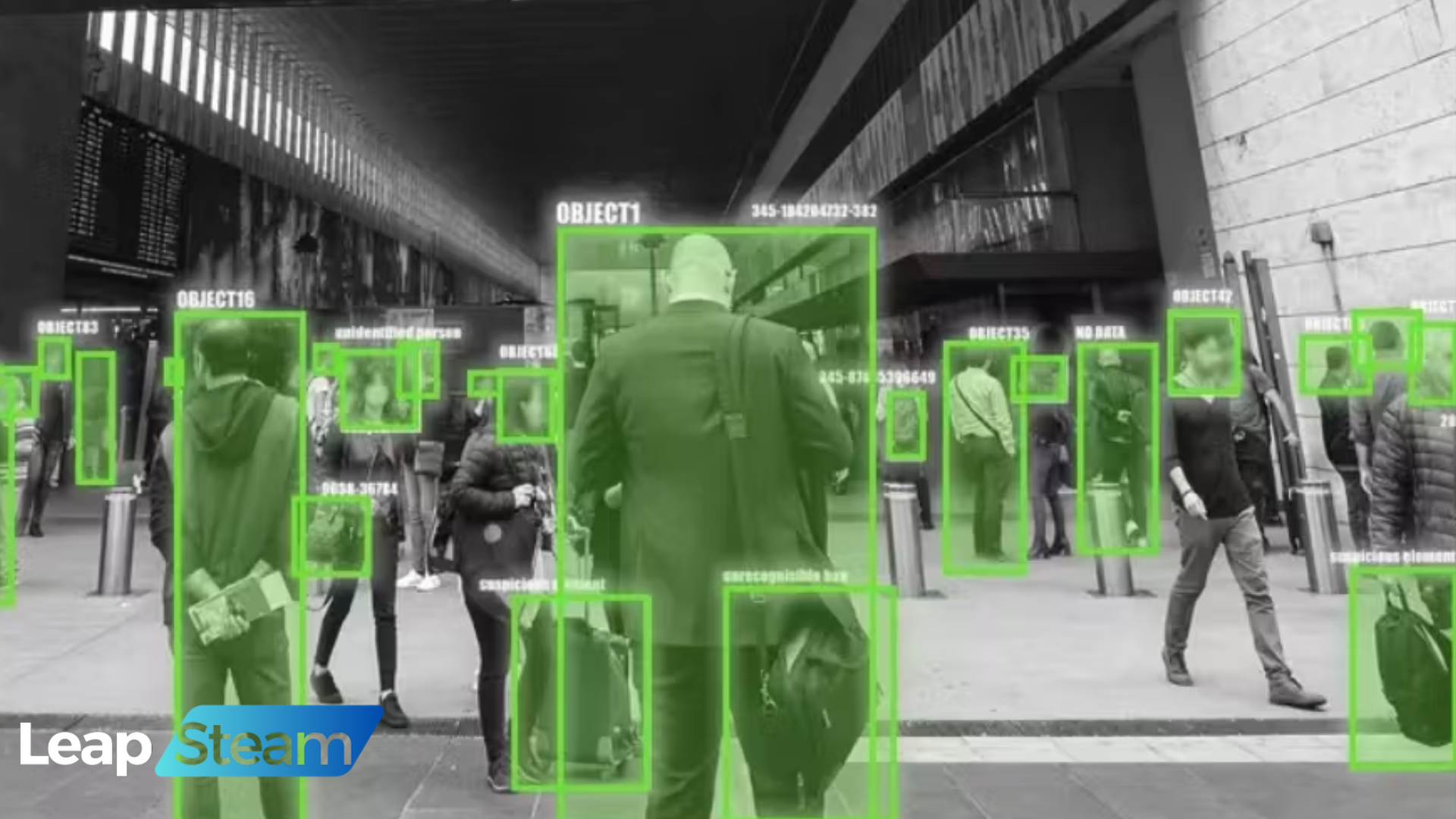
The following eight companies represent the elite tier of providers, chosen for their technical rigor, security protocols, and ability to scale complex Ai training operations for the American market.
1. Scale AI
Scale AI remains a dominant force among data labelling companies by offering a data engine that integrates directly into the client’s MLOps pipeline. In 2026, their focus has shifted heavily toward RLHF for frontier models. Their ability to provide high-quality data labeling services at massive scale makes them the primary choice for Silicon Valley’s largest AI labs.
2. Appen
Appen has successfully pivoted from high-volume crowdsourcing to a high-governance Expert-in-the-Loop model. They are among the few data labelling companies that can provide linguistic and cultural nuance in over 200 languages, making them vital for the global expansion of US-based AI products. Their internal qa in bpo standards ensure that localized data remains accurate and ethically aligned.
3. Telus International
Telus International exemplifies the merger of traditional outsourcing and high-tech data needs. By applying sophisticated qa in bpo logic to their annotation tasks, they provide a level of operational resilience that few other data labelling companies can match. Their security-by-design frameworks are specifically tailored for HIPAA and GDPR-compliant Ai training.
4. Labelbox
Labelbox distinguishes itself by providing an operating system for data. They allow enterprises to manage their own internal labeling teams or utilize the platform’s curated marketplace of specialized data labelling companies. This flexibility is essential for startups that need to maintain tight control over their data sovereignty while scaling rapidly.
5. CloudFactory
CloudFactory focuses on impact sourcing, providing high-quality data labeling services while creating sustainable jobs in emerging tech hubs. In 2026, they are recognized as one of the most reliable data labelling companies for routine, high-volume computer vision tasks, maintaining strict quality through their unique managed workforce model.
6. iMerit
iMerit has carved out a niche among data labelling companies by focusing on complex sectors like medical AI, agritech, and geospatial data. Their agents are often specialized technicians, ensuring that the data labeling services they provide are grounded in deep subject matter expertise rather than generic pattern recognition.
7. Cogito Tech
Cogito Tech is a leader for autonomous systems. They are among the top data labelling companies specializing in LiDAR, 3D point cloud, and video interpolation. Their recursive qa in bpo protocols ensure that the data used for autonomous vehicle Ai training meets the Zero-Tolerance error threshold required for safety-critical systems.
8. Specialized Boutique BPOs
In 2026, we see a rise in Boutique data labelling companies operating out of high-performance hubs like Vietnam and Poland. These firms offer highly customized data labeling services led by technical practitioners who balance university-level education with advanced computer skills. These pods are often more agile than the giants, providing the technical triage and human logic required for specialized marketing and real estate AI projects.
Conclusion: Engineering the Future of Truth
The architecture of a successful AI enterprise in 2026 is built on a foundation of human-centric precision. Data labelling companies are no longer peripheral vendors; they are the architects of the ground truth that defines our digital reality. By leveraging specialized data labeling services and integrating rigorous qa in bpo standards, American firms can ensure that their Ai training efforts yield resilient, responsive, and ethically sound models.
In a world where everyone has access to the same open-source algorithms, the only true differentiator is the quality of the data. Choosing from the top data labelling companies is a commitment to excellence and a safeguard for your brand’s digital legacy. Invest in the precision of the human mind to power the brilliance of the machine.
Frequently Asked Questions (FAQ)
1. How do data labelling companies ensure data privacy in 2026?
Elite data labelling companies utilize Clean Room protocols. This means data is processed in encrypted, remote environments where agents cannot download or screenshot sensitive information. Compliance with SOC 2 Type II and HIPAA is the baseline standard for any reputable partner.
2. Why is qa in bpo important for machine learning?
Without qa in bpo, errors in the labeling process are magnified during the training phase. High-governance QA ensures that the Signal-to-Noise ratio remains high, preventing the model from learning incorrect patterns or inheriting human biases.
3. What is the average cost of professional data labeling services?
In 2026, pricing has moved from per-task to per-project or dedicated pod models. While boutique data labelling companies may offer more competitive rates, the ROI is measured in the First-Pass Accuracy of the data, which significantly reduces the cost of model retraining.
4. Can AI annotate its own data for AI training?
To an extent, yes. Many data labelling companies use Auto-Labeling to handle 80% of the work. However, the remaining 20% of the most complex and ambiguous cases require expert human logic to provide the ground truth that prevents model hallucination.