Customer expectations have structurally shifted. According to Salesforce’s 2025 State of the Connected Customer report, 88% of customers say the experience a company provides matters as much as its products and 80% expect consistent interactions across every channel they use. For growing businesses, meeting these expectations with a purely internal support team means carrying fixed costs that scale with headcount, not with revenue, and building operational infrastructure that competes with product development for the same management attention. This guide covers the seven strategic reasons companies choose to outsource customer service with specific financial benchmarks, operational mechanisms, and implementation guidance for each.
1. Reduce Costs and Gain Budget Flexibility
The financial case for customer service outsourcing is strongest when the comparison is made correctly not base salary versus BPO hourly rate, but fully loaded internal cost versus all-in outsourced cost.
The fully loaded annual cost of a US-based customer support agent including base salary, payroll taxes, health benefits, paid time off, equipment, and HR management overhead runs $55,000 – $80,000 per year, according to SHRM’s 2024 Employee Benefits Survey. That figure does not include recruiting costs ($4,000 – $7,000 per hire) or the productivity loss during the 6 – 8 week ramp period before a new agent reaches full effectiveness.
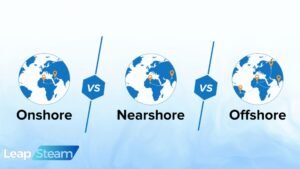
When you outsource customer service to an offshore or nearshore partner, the engagement rate is typically all-inclusive benefits, hardware, facility costs, and HR administration are absorbed by the vendor. For offshore partners in Vietnam or the Philippines, fully loaded annual cost per agent runs $18,000 – $30,000. For nearshore Latin American partners, $28,000 – $45,000. The cost differential is 40 – 65% below equivalent US staffing before any efficiency gains are counted.
Beyond direct cost reduction, the financial structure changes in a way that matters operationally: fixed costs become variable. You pay for capacity or output rather than carrying full-time headcount through slow periods. This budget flexibility allows capital to be redirected toward product development, marketing, or runway extension functions that generate revenue rather than absorb it.
The metric to present to finance teams: Cost Per Resolution (CPR). According to HDI’s 2024 Support Center Practices Report, the average fully loaded CPR for US internal email support runs $28 – $42 per resolved ticket. A well-managed outsource customer service engagement at steady state typically produces CPR of $8 – $15 a reduction of 50 – 65% that compounds directly with ticket volume.
2. Fully Focus on Your Core Business
Every hour your engineering team spends answering support tickets is an hour not spent building a product. Every hour your operations director spends managing shift schedules is an hour not spent on strategic planning. Support operations, when managed internally without dedicated leadership, consistently pull the highest-leverage people in the company into the lowest-leverage work.
The opportunity cost is measurable. According to research from the University of California, Irvine, recovering deep cognitive focus after an interruption takes an average of 23 minutes. For an engineer handling five support tickets per day a modest volume for any product with real users that represents over two hours of productive development time lost daily to context-switching alone.
When you outsource customer service to a specialist partner, this diversion stops. Engineers receive only the escalations that genuinely require code-level intervention, fully documented and pre-triaged. Operations directors manage vendor performance through data dashboards rather than floor-level supervision. Leadership attention returns to the decisions that determine competitive position, product roadmap, market expansion, and strategic partnerships.
This division of labor also extends to outsource email support services specifically. Complex document processing, multi-step troubleshooting workflows, and high-volume asynchronous communication are handled by the outsourced team as core functions not squeezed between other responsibilities by internal staff who were hired for different work.
3. Access Deep Expertise and the Latest Technologies

Building a high-performing internal support operation requires more than hiring agents. It requires QA management infrastructure, workforce management systems, omnichannel routing platforms, real-time sentiment analysis tools, and ongoing training investment in a technology and management stack that most mid-market companies cannot justify building for a single function.
Enterprise-grade help desk licensing alone represents significant fixed cost. Zendesk’s professional tier runs $49 – $99 per agent seat per month. Salesforce Service Cloud starts at $75 per seat. QA auditing platforms, workforce management tools, and reporting dashboards add further per-seat costs that scale linearly with every agent added.
Specialist BPO partners operate this infrastructure across large client pools, accessing volume discounts unavailable to individual companies at typical support team sizes. When you partner with them, the technology cost is included in the engagement rate rather than billed separately, you access enterprise-grade tooling without the capital expenditure or the internal expertise required to configure and maintain it.
Beyond technology, the operational expertise compounds. A specialist customer service outsourcing partner has solved the problems your company is encountering for the first time escalation matrix design, QA scorecard calibration, knowledge base architecture, agent coaching frameworks across dozens of client engagements. That institutional knowledge transfers to your operation immediately, rather than being built from scratch through trial and error.
4. Stay Agile During Activity Peaks
Ticket volume in most businesses is not linear. E-commerce brands experience 3 – 5x volume spikes during Q4 holiday periods. SaaS companies see surge demand following major releases, outages, or viral product moments. Logistics operations face predictable seasonal peaks that internal teams sized for average load cannot absorb without quality degradation or overtime costs.
According to Salesforce’s 2024 Holiday Shopping Report, global e-commerce customer service volume increases 40 – 60% during peak holiday weeks. For an internal team sized for average monthly load, absorbing a 50% volume spike means either extending response times significantly or paying overtime premiums Bureau of Labor Statistics data places overnight and weekend shift differentials at 15 – 30% above base hourly rates.
Customer service outsourcing provides structural elasticity that internal staffing cannot. BPO partners maintain trained agent pools that can be deployed to your account within two to four weeks during surge periods staffed with agents who understand your product and brand voice, not new hires learning on the job during your highest-stakes operational window. When volume normalizes, headcount scales back down without the severance costs, morale impact, or institutional knowledge loss that internal layoffs produce.
The financial model for this elasticity is straightforward: you pay for surge capacity only when you use it, at the contracted per-agent or per-ticket rate, without the recruiting, onboarding, and severance costs that internal scaling cycles generate on both ends.
5. Deliver a Better Customer Experience and Build Loyalty
The persistent assumption that internal teams automatically deliver better customer experience than outsourced teams reflects how internal operations are imagined, not how they typically function under real operational pressure. Internal teams without dedicated QA infrastructure, structured coaching programs, and performance accountability frameworks consistently produce variable, declining quality as volume increases and management attention fragments.
Professional customer service outsourcing partners are built around the opposite dynamic. Their contracts are structured with SLA targets First Contact Resolution rates, CSAT minimums, ticket reopen rate thresholds with financial penalties for non-compliance. Quality improvement is not aspirational; it is contractually required and financially enforced.
According to Gartner’s 2024 Customer Service and Support Leadership Survey, organizations with contractual SLA frameworks in outsourced support operations report 31% higher CSAT scores on average than those relying on informal performance management with internal teams. The accountability structure that outsourcing imposes fee-at-risk clauses, QA calibration sessions, weekly performance reviews produces consistency that internally managed operations rarely sustain without equivalent investment in dedicated QA infrastructure.
For live chat support specifically, the quality differential is most visible in high-intent interactions: cart abandonment recovery, account retention conversations, and complex troubleshooting where the outcome directly affects whether the customer stays or churns. Trained outsourced agents operating under structured quality frameworks consistently outperform ad-hoc internal coverage on these interactions, the ones where experience and accountability matter most.
According to Bain & Company’s research, a 5% improvement in customer retention produces profit gains of 25 – 95% over a five-year period. The customer experience quality delivered by a well-managed outsource customer service operation is the operational mechanism through which that retention improvement is achieved.
6. Ensure 24/7 Availability
The global economy operates across 24 time zones. A buyer in London encountering checkout friction at 3 AM EST, a Korean enterprise client experiencing an API failure at 9 AM Seoul time while the US team is offline, a German shopper with a product question on a Sunday afternoon none of these users will wait until the next US business day. They will find a competitor who answers them now.
According to Shopify’s 2024 Commerce Report, 43% of online purchases occur between 8 PM and midnight local time, a window when most US-based internal support teams are unavailable. Intercom’s 2024 Conversational Support Benchmark found that e-commerce sites with 24/7 human chat coverage convert off-hours visitors at 2.4 times the rate of sites relying on chatbot-only or no coverage during those hours.
Building genuine 24/7 coverage internally requires three-shift operations with night shift differentials, redundant staffing to prevent single-point-of-failure gaps, and the management complexity of supervising distributed time schedules, a cost and operational burden that most companies below 500 employees cannot sustain without significant quality trade-offs.
Customer service outsourcing solves this through Follow-the-Sun coverage: agent teams in Southeast Asia, Eastern Europe, and Latin America operating during their standard business hours provide seamless coverage of US overnight and weekend windows at standard rates. The result is genuine 24/7 availability not chatbot deflection presenting as coverage at a cost structure that domestic overnight staffing cannot approach.
7. Expand Globally with Multilingual Capabilities
International market expansion creates immediate support infrastructure requirements that most domestic teams cannot meet. A German-speaking customer expecting responses in German, a Korean enterprise client with cultural expectations around response formality and speed, a Japanese user for whom service manner is as important as resolution accuracy none of these are served adequately by English-only or machine-translation-dependent support.
Building multilingual internal support requires hiring native speakers for each target market, managing cultural training across language teams, and maintaining consistency of brand voice across languages, a recruiting, management, and quality challenge that scales with every new market entered.
Specialist customer service outsourcing partners maintain multilingual agent teams operating in their native time zones and cultural contexts. Language accuracy and cultural fluency are built into the delivery model rather than retrofitted onto it. For US companies targeting Asian markets in particular, this capability is a direct competitive requirement: according to Forrester’s 2024 CX Index, customers who receive support in their native language by culturally fluent agents are 2.4 times more likely to renew a subscription than those served through translated or English-only interactions.
Conclusion
Outsourcing customer service is not a cost-cutting tactic, it is a structural capability decision. The seven reasons above address different dimensions of the same underlying problem: building and managing a high-performing support operation internally competes with product development, product quality, market expansion, and financial efficiency for the same limited resources.
Customer service outsourcing resolves this by placing support delivery in the hands of specialists whose entire infrastructure, hiring model, and performance framework is built for it, freeing internal resources for the work that determines competitive position.
According to Deloitte’s 2025 Global Outsourcing Survey, 59% of companies cite access to capabilities not available internally as their primary driver for outsourcing ahead of cost reduction (57%) and scalability (40%). The shift reflects a market that has moved beyond viewing outsourcing as a compromise and toward viewing it as a strategic capability investment with measurable returns.
Frequently Asked Questions
Is it safe to outsource customer service for a highly technical product?
Yes, provided you select a specialist BPO rather than a generalist contact center and invest adequately in onboarding. A capable partner spends four to six weeks on product immersion, shadow phases where agents observe your internal team handling real tickets, and competency testing before agents handle live interactions. Partners who describe onboarding in days rather than weeks are not equipped for technical product support. Request the specific onboarding curriculum and verify it covers your product’s complexity before committing.
How do we maintain brand voice consistency with an external team?
Through a documented Style Guide developed during onboarding covering tone, terminology standards, formatting conventions, and examples of approved and rejected phrasing combined with ongoing QA calibration sessions where your internal operations lead and the vendor’s QA manager review the same ticket samples weekly. The QA cadence is what maintains consistency over time; the Style Guide alone is not sufficient without the review process that enforces it.
What is the difference between outsource email support services and live chat support in a BPO?
Live chat support is synchronous agents respond in real-time, making it effective for sales enablement, cart abandonment recovery, and urgent issue resolution where immediate interaction drives conversion. Outsource email support services are asynchronous, better suited for complex troubleshooting, document processing, and multi-step issues that require investigation before response. A strong customer service outsourcing partner manages both channels with separate agent training and SLA frameworks, recognizing that the skills and response standards differ significantly between the two.
How quickly can a BPO partner scale up support capacity during a seasonal peak?
With adequate advance notice typically four to six weeks before the peak period begins a specialist BPO can deploy additional trained agents to your account and complete product onboarding before the volume surge arrives. Attempting to scale reactively during an active peak produces agents who are learning the product while handling live customer interactions, a quality risk that defeats the purpose of the engagement. Build your Q4 forecast into your BPO contract as a committed volume range, not a surprise request.
How do we measure whether outsourcing customer service is delivering ROI?
Track four metrics from month one: Cost Per Resolution (against your internal baseline), First Contact Resolution rate (target 65–75% for non-bug Tier 1/2 issues), support-cohort churn rate (90-day churn among users who contacted support, compared to overall churn), and escalation rate to your internal engineering team (should decline as agents build product knowledge). If CPR is lower than internal baseline, FCR is at target, support-cohort churn is below overall churn, and escalation rate is declining, the engagement is delivering on every financial and operational dimension it was designed to address.
Leap Steam provides customer service outsourcing for US companies across fintech, e-commerce, SaaS, gaming, and automotive technology. Our multilingual teams covering English, Japanese, Korean, Chinese, and Vietnamese deliver 24/7 coverage with dedicated agents, structured onboarding, and SLA frameworks built around FCR and CSAT from day one.