
Customer retention is the most leveraged financial metric in any subscription or repeat-purchase business and support quality is one of its primary drivers. According to Bain & Company’s research, a 5% improvement in customer retention produces profit increases of 25–95% over a five-year period. That improvement starts with measuring the right things. Whether you manage an internal helpdesk or rely on customer service outsourcing, the KPI framework you track determines what your team optimizes for and what gets ignored. This guide covers the nine customer service KPIs every support director must monitor, including verified benchmarks and specific guidance for managing BPO partners against each metric.
Speed Metrics: First Response Time and Average Handle Time
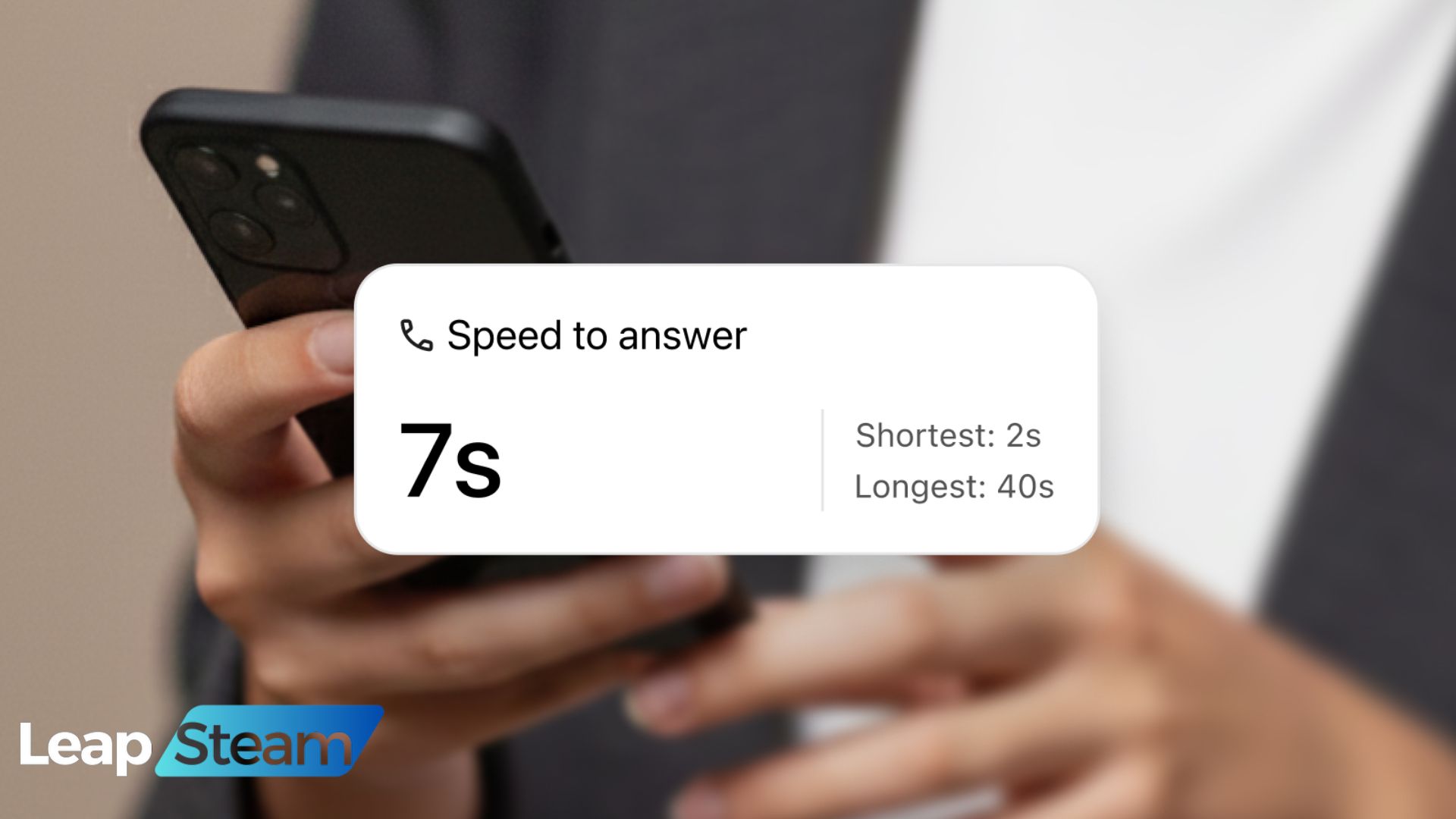
Speed is the baseline of customer satisfaction but only when paired with accuracy. These two metrics measure different dimensions of response speed and must be tracked together to avoid the most common optimization mistake in support operations.
First Response Time (FRT)
What it measures: The time elapsed between a customer submitting a ticket and receiving the first substantive human reply. Automated acknowledgement emails do not count.
Why it matters: FRT is the strongest leading indicator of user anxiety. A fast first response communicates that the issue is being handled, reducing the probability the customer escalates to a more expensive channel or posts publicly about the problem.
Benchmark: Zendesk’s 2025 CX Benchmark Report places the median FRT for B2B SaaS email support at 4–8 business hours. For e-commerce and retail, competitive operations are moving toward 1–2 hours as consumer expectations accelerate.
KPI in BPO context: FRT is typically the first SLA target in any customer service outsourcing contract. It is measurable, objective, and directly within the vendor’s control making it the most common metric tied to financial penalty clauses.
Average Handle Time (AHT)
What it measures: Total agent time spent on a ticket from open to close, including all communication and internal processing.
Why it matters: AHT measures operational efficiency but it must be used carefully. Aggressive AHT targets incentivize agents to close tickets quickly rather than correctly. The most productive use of AHT data is identifying training gaps: if two agents handle identical ticket types with a 15-minute AHT differential, the slower agent needs specific product or process coaching.
Benchmark: For technical SaaS support, typical AHT ranges from 15–35 minutes per ticket at Tier 1/2. Unusually low AHT in a technical context is frequently a signal of premature closure, not genuine efficiency.
Quality Metrics: FCR, CSAT, and Ticket Reopen Rate

Speed metrics tell you how fast your team responds. Quality metrics tell you whether the responses are actually resolving the problem. In any KPI in BPO framework, quality metrics carry more weight than speed metrics for long-term retention outcomes.
First Contact Resolution (FCR)
What it measures: The percentage of tickets fully resolved in a single interaction, without requiring follow-up from the customer or a second agent touch.
Why it matters: FCR is the most efficient indicator of support competency. High FCR means agents have the knowledge, tool access, and communication skills to resolve issues definitively. Low FCR means customers repeat themselves across multiple interactions, a pattern that damages brand trust more reliably than slow response times.
Benchmark: The Help Desk Institute’s 2024 Support Center Practices Report places healthy FCR for SaaS and e-commerce email support between 65% and 75%. Operations consistently below 60% have a systemic training or documentation problem that requires investigation before adjusting staffing.
Customer Satisfaction Score (CSAT)
What it measures: A transactional score from a post-resolution survey, typically asking the customer to rate the interaction on a 1–5 scale immediately after ticket closure.
Why it matters: CSAT is the most direct measurement of agent tone, clarity, and resolution accuracy. It reflects how the customer experienced the interaction — not just whether the technical problem was solved. A technically correct answer delivered poorly will produce low CSAT.
Benchmark: Zendesk’s 2025 benchmark data places acceptable CSAT for B2B SaaS and technical support at 85–90%. For e-commerce and general B2C, the standard is 90–95%. Teams consistently below 80% have a systemic issue typically insufficient product training, language calibration problems, or inadequate escalation protocols.
Ticket Reopen Rate
What it measures: The percentage of tickets marked resolved that are reopened by the customer within seven days indicating the original resolution was incomplete or incorrect.
Why it matters: Reopen rate is one of the most honest quality indicators in support operations because it reflects actual customer behavior rather than survey response. A customer who reopens a ticket is explicitly communicating that the first resolution failed. According to Zendesk’s 2025 data, the median reopen rate for technical support is 7.3% above 10% signals a resolution quality problem that CSAT scores alone may not capture.
KPI in BPO context: Reopen rate is an underused metric in customer service outsourcing contracts. Including it alongside CSAT closes a common accountability gap; agents who close tickets prematurely to hit CSAT targets will produce elevated reopen rates, making the pattern detectable.
Operations Metrics: Volume, Backlog, and Escalation Rate
These metrics assess the overall health of the support queue rather than individual ticket quality. They are the leading indicators that tell operations directors when staffing, documentation, or product issues are about to create a support crisis.
Ticket Volume and Backlog
What it measures: Volume tracks total inbound tickets per period. Backlog measures unresolved tickets at the end of each shift or reporting window.
Why it matters: Volume data enables staffing forecasts. Backlog is the early warning system a queue growing consistently day-over-day indicates that inbound volume has exceeded resolution capacity, or that a new category of complex tickets is emerging following a product update.
Benchmark: Backlogs should remain stable day-over-day. Growth of more than 10–15% over three consecutive days signals a capacity or complexity problem requiring immediate investigation.
Escalation Rate
What it measures: The percentage of Tier 1 tickets that agents cannot resolve independently and must transfer to Tier 2 or internal engineering.
Why it matters: You outsource or staff a Tier 1 team to protect higher-cost internal resources. A high escalation rate means the front-line team is functioning as an expensive routing system rather than a resolution layer, negating the primary operational benefit of the structure. According to the International Customer Management Institute’s 2024 Contact Center Benchmark, a well-trained Tier 1 team should maintain an escalation rate below 10–15%.
KPI in BPO context: Escalation rate is one of the most diagnostic KPIs in customer service outsourcing. A declining escalation rate over the first 90 days of a BPO engagement confirms the team is building product knowledge and resolving independently. A rate that plateaus or rises indicates a knowledge base or onboarding problem that requires intervention.
Financial Metrics: Cost Per Resolution and Agent Utilization
These metrics connect support performance to business economics, the language that justifies investment decisions to CFOs and COOs.
Cost Per Resolution (CPR)
What it measures: Total support operating cost divided by the number of tickets successfully resolved in the same period.
Why it matters: CPR is the metric that enables direct comparison between in-house and outsourced support economics. For US-based e-commerce operations, CPR for outsourced email support typically runs $8–$15 per resolved ticket, compared to $25–$45 for equivalent in-house staffing when management overhead and benefits are included, according to industry benchmarks compiled by HDI’s 2024 Support Center Practices Report.
KPI in BPO context: Establish CPR baseline in month one of a customer service outsourcing engagement. A well-managed BPO relationship should produce a 15–25% CPR reduction between months one and six as agents build product familiarity and FCR improves.
Agent Utilization Rate
What it measures: The percentage of an agent’s paid shift spent actively working on tickets versus idle time between assignments.
Why it matters: Utilization below 65% indicates overstaffing, you are paying for unproductive capacity. Utilization consistently above 85% creates burnout conditions. According to Gallup’s 2024 Workplace Burnout Report, agents under sustained high-utilization conditions produce measurably lower CSAT and FCR within 60–90 days making 70–80% the sustainable target range that maximizes throughput without degrading quality.
Managing KPI in BPO Environments: How to Structure Vendor Accountability
Metrics only deliver value when tied to contractual accountability. When transitioning to customer service outsourcing, most operational failures trace back to one of three structural errors in how KPIs were set up at the start of the engagement.
Error 1: Setting targets without internal baselines. Before signing a BPO contract, document your internal performance on FRT, FCR, CSAT, and escalation rate for the 30 days prior. Use these as the baseline the vendor must meet or exceed by month three. Accepting the vendor’s proposed targets without internal comparison leaves you negotiating against their interests rather than your actual performance standard.
Error 2: Penalizing speed without measuring quality. Contracts that attach financial penalties exclusively to FRT create agents who respond quickly and resolve poorly. A balanced KPI in BPO SLA structure includes both speed floors (FRT within X hours) and quality minimums (CSAT above 85%, FCR above 65%, reopen rate below 8%). Vendors penalized only for speed will optimize only for speed.
Error 3: Relying on vendor self-reporting. Configure your own helpdesk dashboards Zendesk, Freshdesk, or equivalent to calculate KPIs independently from your own data. Discrepancies between vendor reports and your own dashboard are a diagnostic signal worth investigating immediately.
The standard fee-at-risk model in customer service outsourcing contracts ties 5–15% of the monthly invoice to SLA achievement across FRT and CSAT targets. If the vendor misses agreed targets, that percentage is credited back. This structure aligns vendor incentives with your quality outcomes not with ticket volume.
Conclusion
The KPI framework you establish for customer service operations determines what your team internal or outsourced actually optimizes for. Speed metrics without quality metrics produce fast, inaccurate resolutions. Quality metrics without financial metrics obscure whether the investment is justified. Financial metrics without operational metrics miss the early warning signs of staffing and documentation problems before they compound.
The nine metrics above, tracked consistently and tied to contractual accountability in BPO environments, give support directors the complete picture of what is working, what is failing, and where to intervene before performance problems become retention problems.
Frequently Asked Questions
How many KPIs should a support team track?
Four to six core metrics is the practical maximum for actionable management. Start with FRT, FCR, CSAT, and escalation rate, these four cover speed, quality, and operational health. Add ticket reopen rate and CPR once the core four are stable and reporting is automated. Tracking more than six simultaneously creates data noise that dilutes focus rather than improving decisions.
Is AHT a reliable quality metric?
No. AHT measures efficiency, not quality. Using AHT as a primary performance target consistently degrades resolution quality because agents prioritize closing tickets fast over closing them correctly. Use AHT diagnostically to identify training gaps between agents handling the same ticket types rather than as an SLA target.
What CSAT benchmark should we require from a BPO partner?
For B2B SaaS and technical support, 85–90% is the industry standard. For e-commerce and general B2C, 90–95% is the appropriate target. Below 80% requires immediate investigation, the root cause is almost always one of three things: insufficient product training, language or communication calibration problems, or inadequate knowledge base coverage for the ticket categories the team is handling.
How do we track these metrics accurately without relying on vendor reporting?
Use a professional helpdesk platform Zendesk, Intercom, or Freshdesk configured to calculate FRT, FCR, AHT, and reopen rate automatically from ticket data. These platforms generate unbiased metrics independent of agent or vendor self-reporting. Review your own dashboard data weekly alongside vendor reports, and investigate any consistent discrepancy between the two data sources.
Leap Steam provides customer service outsourcing for US companies across fintech, e-commerce, SaaS, gaming, and automotive technology. Our BPO engagements are structured with independent KPI dashboards, weekly QA calibrations, and fee-at-risk SLA contracts tied to FCR, CSAT, and reopen rate targets from day one.








Pingback: Top 9 Retail Outsourcing Companies in 2026 - Leap Steam