
Choosing whether to build an internal helpdesk or outsource customer support is a critical decision that dictates your brand’s scalability and profit margins. In today’s hyper-competitive market, customer experience is a primary driver of retention. While in-house teams offer deep product knowledge and strict brand control, they carry massive fixed costs. Conversely, customer service outsourcing provides immediate elasticity and cost reduction but requires meticulous vendor selection. This comprehensive guide compares the financial, operational, and strategic trade-offs of both models, helping executive leaders navigate the complex “build vs buy” dilemma to secure long-term business growth.
1. Why the Build vs Buy Support Strategy Matters Now
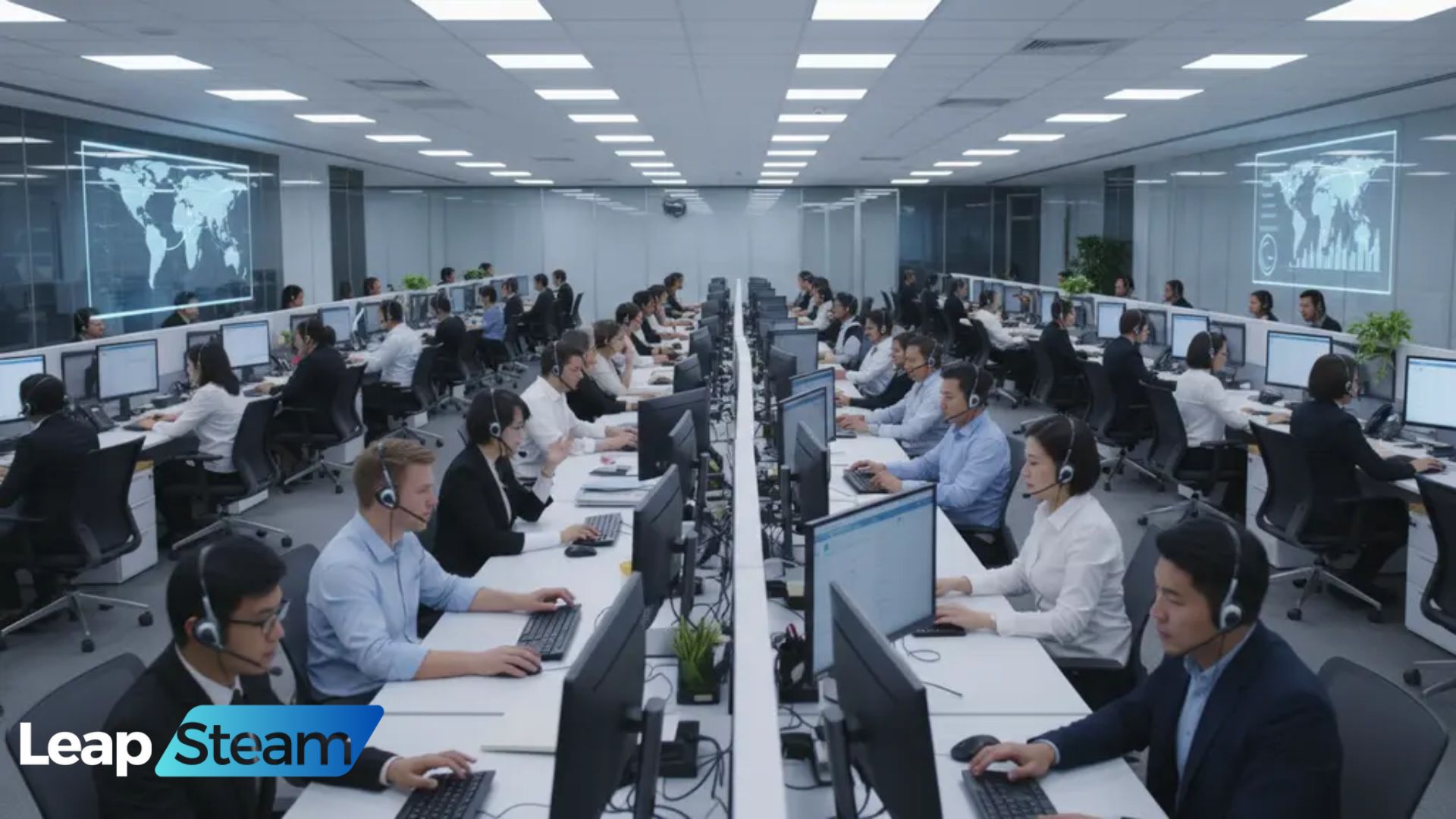
Historically, executive boards viewed customer support strictly as a back-office cost center, a necessary evil to handle complaints. In 2026, that mindset is entirely obsolete. Today, customer service is a direct revenue driver, a core component of brand reputation, and the ultimate determinant of Customer Lifetime Value (CLV). According to ongoing consumer research from PwC, nearly 80% of consumers will abandon a brand after just one or two poor customer service experiences, regardless of how great the product is.
Because the stakes for customer retention are at an all-time high, getting the “build vs. buy” decision right matters far beyond a simple budget spreadsheet. Leadership teams frequently approach this dilemma with heavy internal biases. Some operations directors assume that keeping everything in-house is universally superior due to perceived control. Conversely, some financial officers assume that choosing to outsource customer service is universally better simply because the hourly labor rate appears cheaper on paper.
In reality, neither assumption paints the full picture. The correct operational strategy depends entirely on your company’s current growth stage, product complexity, ticket volume, and long-term CX objectives. Making an informed decision requires looking past gut instincts and analyzing the rigid financial and structural realities of both operational models.
2. The True Financial Burden of In-House Support Teams
When financial planners attempt to calculate the cost of building an in-house customer support department, they frequently make a critical error: they start and stop at the base salary of the agents. That single number drastically underestimates the true, fully-loaded investment required to maintain a domestic team.
To accurately compare models, executives must calculate the total Cost Per Agent, which includes a massive array of hidden, fixed overhead expenses:
- Recruitment and Onboarding: Sourcing, interviewing, and hiring domestic talent is expensive and slow. The Society for Human Resource Management (SHRM) consistently reports that the average cost to hire a corporate employee exceeds $4,000.
- Benefits and Payroll Taxes: Beyond base salaries, companies must pay for healthcare, 401(k) matching, paid time off, and mandatory payroll taxes, which typically add 25% to 35% on top of an employee’s base pay.
- Technology and Infrastructure: Equipping an internal agent requires expensive software licenses for CRM platforms (like Zendesk or Salesforce), cloud telephony systems, AI productivity tools, and physical hardware (laptops, headsets).
- Management Overhead: A team of front-line agents requires dedicated Team Leads, Quality Assurance (QA) analysts, and Workforce Management (WFM) planners to function efficiently.
- The Cost of Attrition: Customer service roles historically suffer from high turnover rates (often exceeding 30% annually). Every time an agent quits, the company loses the thousands of dollars invested in their training and must restart the costly recruitment cycle.
Because in-house teams operate on rigid, fixed headcounts, their operational costs do not flex gracefully. If ticket volumes spike, you must hire ahead of demand (which burns cash). If ticket volumes drop, you are left paying expensive employees to sit idle. While in-house teams provide undeniably strong brand voice control and rapid access to internal product developers, the crushing weight of these fixed costs makes it difficult for fast-growing companies to scale efficiently.
3. What It Really Costs to Outsource Customer Service
The economics completely transform when you evaluate the choice to outsource customer support. Instead of building physical infrastructure, executing endless HR recruitment cycles, and buying software licenses, outsourcing allows you to purchase a fully operational, highly optimized machine as a service.
The Variable Cost Advantage
The primary financial advantage of customer service outsourcing is the shift from fixed overhead to variable expenditure. Premium Business Process Outsourcing (BPO) partners typically charge an all-inclusive hourly rate or a per-ticket resolution fee. This fee already bakes in the cost of management, QA teams, HR recruitment, software licenses, and ongoing training. Ultimately, your startup costs are drastically lower, and your financial spending scales naturally and predictably alongside your actual customer demand.
The Trade-Off: Managing Control and Brand Voice
The inherent trade-off when buying an outsourced solution is the perceived loss of control. When you utilize external teams, you are trusting a third-party vendor to act as the primary voice of your brand.
This gap can be mitigated through rigorous vendor selection and the implementation of strict Service Level Agreements (SLAs). An SLA codifies your expectations regarding First Response Time (FRT), Customer Satisfaction (CSAT), and escalation procedures. However, success depends heavily on geographic strategy:
- Offshore Outsourcing (e.g., Philippines, India): Offers the lowest cost per interaction and is highly effective for massive ticket volumes, though it may require heavier investment in language and cultural alignment training.
- Nearshore/Onshore Outsourcing: Costs more than offshore but provides tighter cultural alignment, reducing friction in highly nuanced, complex customer conversations.
4. How Outsourced Support Teams Drive Fast Scalability

In the debate between internal and external models, the absolute most significant structural advantage of choosing to outsource customer support is elastic scalability.
In-house teams scale in slow, agonizing steps. You must secure a budget, post job listings, interview candidates, conduct background checks, and endure a multi-week training program before a single new ticket is answered. If your business is highly seasonal (like e-commerce during Black Friday), running viral marketing promotions, or simply experiencing hyper-growth, this massive lag between customer demand and internal support capacity will actively destroy your brand reputation.
Dedicated outsourced support teams are fundamentally engineered for high-speed flexibility. A premium BPO partner maintains vast networks of pre-vetted talent and sophisticated workforce planning tools. If your company anticipates a massive 300% spike in ticket volume next month due to a new product launch, a BPO can seamlessly rapidly deploy 50 fully trained agents to your account within a matter of weeks.
Furthermore, when the seasonal rush subsides, the outsourced vendor simply scales the headcount back down. You do not have to conduct painful internal layoffs or carry the financial burden of unused, idle staff. This rapid elasticity extends to omnichannel support; if you suddenly need to launch 24/7 global Live Chat coverage, an outsourced partner with existing global infrastructure can deploy it months faster than an internal HR department.
5. The Hybrid Support Model: A Strategic Middle Ground
For many enterprise organizations, the build vs buy debate does not have to end in a binary choice. The most practical and financially sound approach is frequently a carefully orchestrated Hybrid Model.
In a standard hybrid architecture, an organization retains a small, highly specialized internal team to handle Tier-3 technical escalations, high-value VIP client relationships, and complex compliance issues. Simultaneously, the company relies on an outsourced BPO partner to act as an operational firewall handling the massive volume of Tier-1 and Tier-2 inquiries (e.g., password resets, order tracking, basic troubleshooting), managing weekend shifts, and ensuring 24/7 global coverage.
Why the Hybrid Model Works
This approach perfectly balances the strengths of both systems. It preserves absolute brand voice control and deep product knowledge precisely where it matters most (high-stakes escalations), while utilizing customer service outsourcing to eliminate the crushing cost and scalability bottlenecks of high-volume triage.
However, a hybrid model only succeeds when the operational boundaries are explicitly defined. There must be flawless CRM integration, clear ticketing escalation matrices, and continuous open communication between the internal managers and the outsourced team leaders to prevent disjointed customer experiences.
6. What Executives Must Evaluate Before Making a Choice
There is no universal correct answer to the support dilemma. Before signing a BPO contract or approving an internal hiring budget, executive leadership must rigorously evaluate their organization against these four critical pillars:
- Current and Projected Ticket Volume: Low inbound volume with extremely high technical complexity (e.g., bespoke B2B enterprise software) generally favors keeping operations in-house. Massive volume with moderate-to-low complexity (e.g., retail, SaaS password support) overwhelmingly favors outsourcing or a hybrid model.
- Corporate Growth Trajectory: If your customer base is projected to double over the next 12 to 18 months, building an in-house team now means you will likely have to rebuild it again entirely next year as processes break. Partnering with a BPO bakes future scalability directly into your operational foundation.
- Data Security and Compliance Requirements: Highly regulated industries (Healthcare, FinTech) must vet outsourcing partners intensely. Before you outsource customer service, ensure the vendor maintains strict compliance certifications, such as SOC 2 Type II, ISO 27001, HIPAA, or GDPR. If the data is too sensitive to leave your internal network, in-house may be legally required.
- The Cost of the Status Quo: Evaluate your current reality. If your existing in-house team is generating poor CSAT scores, suffering from massive agent burnout, and draining your operational budget, these are glaring red flags. It is a clear signal that your current model is structurally broken, and a pivot to a specialized BPO is required to protect the brand.
Frequently Asked Questions (FAQ)
What are the main pros and cons of building an in-house customer support team?
Pros: In-house teams provide absolute control over company culture, ensure deep alignment with your unique brand voice, and allow agents immediate access to internal product engineers for rapid bug reporting.
Cons: The model is structurally rigid, carrying massive fixed costs (benefits, tech stack, office space). Scaling an internal team is painfully slow, making it difficult to handle sudden traffic spikes without degrading service quality.
What are the primary advantages of customer service outsourcing?
The core advantages include drastically lower operational startup costs, immediate access to 24/7 omnichannel coverage, and built-in elasticity. Outsourced support teams allow your business to scale agent headcount up and down rapidly in response to seasonal demand without the HR nightmare of recruiting and layoffs.
Will outsourcing my customer support hurt my customer experience?
When executed poorly with a cheap, unvetted vendor, it can. However, when you partner with a premium, tech-enabled BPO, outsourcing often improves the customer experience. A dedicated partner can provide faster First Response Times (FRT), offer global weekend coverage, and deploy rigorous Quality Assurance (QA) standards that overworked internal teams frequently neglect.
How do I know if the Hybrid Support Model is right for my business?
A hybrid model is ideal if your business experiences a high volume of routine inquiries but also requires deep technical expertise for complex escalations. If you want to protect your internal engineering team from answering basic “how-to” questions, deploying an outsourced team to handle Tier 1 triage while keeping Tier 3 escalations in-house is the perfect strategic balance.
How do we protect sensitive customer data if we outsource customer support?
Data security is paramount. When selecting a BPO, mandate that they operate under strict global compliance frameworks (such as SOC 2 Type II and GDPR). Furthermore, utilize Role-Based Access Control (RBAC) within your CRM so that external agents can resolve tickets without ever gaining full visibility into unencrypted credit card numbers or backend proprietary code.